Starting a Flower Farm on a Shoestring Budget | Tips for Cost-Conscious Growers
You want to be a flower farmer, but you are quickly feeling like your dream is growing bigger than your bank account can handle.
Can you flower farm without buying plugs?
Peony bare roots?
A walk-in cooler?
Landscape fabric?
Can you launch into this dream without investing in expensive courses, equipment, and infrastructure?

Yes, you can dive into the world of flower farming without major investments. Major investments can make it nicer, but they are far from a requirement. You can even start flower farming with a small amount of space—to learn more about that, check out our blog on Maximizing Output for the Small-Scale Flower Farm here.
Flower farming, as I often say, is not a one size fits all.
This is a mantra I learned the hard way and is the common theme throughout our blogs. Everyone has a different launching point:
Perhaps you have tons of land but a limited budget.
Perhaps you have a big budget but are limited on land.
Perhaps you are limited on cash and land (that was our story!).
If you are willing to put the effort behind flower farming—and trust me, there is a lot of effort that is demanded—you can start a flower farm even on a slim budget. Heck, even if you have money to throw at it, you should still approach flower farming on a slim budget. That’s just business smart.
You made the emotional decision to start a flower farm, but now it’s time to approach it from a business standpoint. Ultimately, this will allow you to actually flower farm instead of just dreaming of flower farming.
Slow and steady wins the race.


A Little Backstory: How Sierra Flower Farm Came to Be
For those of you who haven’t read our previous blogs, here’s how Sierra Flower Farm came to be.
I wanted to flower farm.
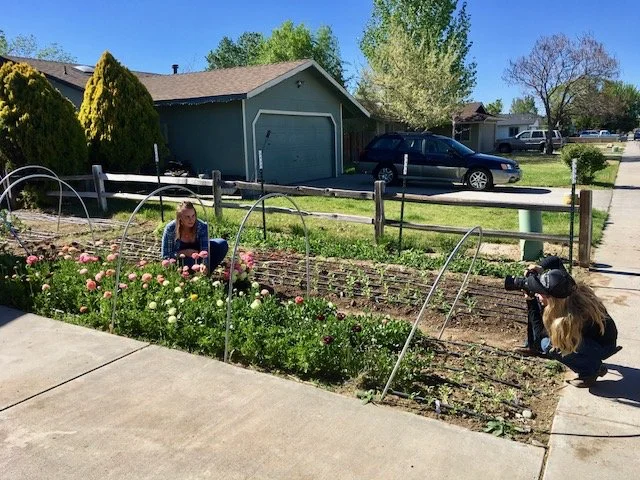
My mom gifted me $1,000 and we used our tax refund, so altogether we had about $2,000 - $3,000 to start Sierra Flower Farm with.
We also only had about 1,600 square feet of hodgepodge growing space to work with that was full of large river rock.
In case you didn’t notice—our entire budget for first-year flower farming wasn’t much more than one of the more popular online courses currently offered. Heck, back when we started, online courses weren’t even a thing!
YouTube was lacking, and blogs—other than a few big flower farmers—were near non-existent. Growing for Marketwas super expensive because it was before they had the more affordable digital option. Coming by information was tough. Finding free information and wading through the good versus the dumb was even tougher.
There was a lot of trial and error. Definitely not a spoon-fed-road-map-to-a-successful-flower-farm-business-modelroute.
Fast forward five years later:
We are still flower farming (and it’s only growing in many ways!) and, bonus: we’re here to share our experiences, knowledge, and be here to give you encouragement. Worth it.
If you want to learn more about our beginnings, check out our blogs:

There’s a Lot to Learn When Starting a Flower Farming Business
When you decide to start a flower farm, you're not just growing flowers—you’re diving into a world that demands many skills and even more determination. Here are just a few areas where you'll need to develop your expertise:
Learning to Grow
Marketing
Floristry (even basic bouquet making and variety selection takes some designer skills!)
Business
With each of these comes a huge list of skills, tasks, and decisions to tackle. You don’t simply just "flower farm"—you are now also an entrepreneur, a business owner, and a marketer. You are the salesperson, the communication person, the delivery person, the designer. All of that on top of being the one who is:
Sowing seeds
Planting
Harvesting
Soil preparing
Crop planning
There are so many moving parts that it can feel mind-boggling—I get it, I’ve been there!
Starting From Scratch
I also want to mention that I had very minimal growing experience when I started. I had limited skills in photography, never put together my own website, or designed logos.
All of this—with the support of my husband—we figured out as we went. I started the farm on a slim budget and with a negative 10 in experience in both business and farming. Plus, I had two toddlers on top of it all. There was a lot of juggling.
So when I say this is doable, I am also the example of this is doable. If you have the grit, you are halfway there.
It Becomes Second Nature
I assure you, that in time, all that I listed becomes second nature. I will never call it easy because being a business owner and flower farmer is not an easy road. Rewarding, invigorating, sure—but never easy.
Being a business owner of any kind should never be "easy"—if it is, it probably means your business isn’t growingand you aren’t growing. If you approach it with everything you've got, you will be challenged physically, mentally, and emotionally.
However, if you want to be a flower farmer, I promise it is completely worth it.
When Starting a Flower Farm on a Shoestring Budget:
You will have to wear many hats to make it work. You have to pour yourself into this new venture, this new way of life, and immerse yourself in it. Flower farming is far from a get-rich-quick scheme, though it can be profitable—and there are many flower farmers who have made it their living!
With all that said, here are our top 4 recommendations/realities for starting a flower farm on a budget:
Have a Budget for Your Flower Farm
There are a lot of investments to make, and you’ll quickly see those add up. This is why you need to watch out for emotional or impulse purchases—they’ll getcha!
Set a Budget for the Year
That might sound like a loose guideline, but it’s crucial to decide what your first year will look like. Are you planning on having product from spring through Christmas, or maybe summer only?
As a flower farmer, you may find yourself putting in fall orders for the following year by June, which means paying for them come fall. Your budget needs to cover those orders on top of all the upfront costs for the season and costs to keep the season rolling. It’s a lot.
If you haven’t figured out your product plan yet, check out our blog:
The Importance of Deciding on a Product Before Crop Planning
Budgeting Without Historical Data
As a first-year flower farmer, you’re not going to have historical data to base this off of. It might be as simple as asking yourself:
“How much can I realistically put into this business?”
Recommendations for Starting a Flower Farm:
Go as debt-free as possible.
Don’t count on sales before you make them.
Don’t blow your budget frivolously.
Don’t give yourself so much of a budget that it takes food from your mouth.
Be careful not to count your chickens before those eggs hatch. Don’t blow your budget in the spring with the idea that you will make it up in the summer. If those sales happen—great! But it’s best not to rely on them. It will allow you to reinvest more, but realize that building a market takes time.
Your budget needs to cover all your expenses for the year. Depending on your budget, you may find yourself saying “no” to a lot of those desired purchases—especially when it comes to purchasing tons of flower varieties. Keep in mind that you need everything necessary to actually have product to sell in the end.
Let’s Break This Down a Little Further
Where the Money Goes: Starting a Flower Farming Business
Say you can swing $3,000 to start your flower farm. That $3,000 is going to be split so many ways just in growing supplies alone:
Seeds
Seed Starting Substrate
Seed Starting Supplies
Tubers, Corms, Bulbs
Soil Amendments
Soil Tests
Trellising
Fertilizers
Small Tools
Equipment
Landscape Fabric
Irrigation Supplies
Farming Isn’t Cheap
Especially if you are starting from scratch. Outside of growing supplies, you’ll need supplies for selling flowers and post-harvesting:
Buckets
Clippers
Flower Food
Rubber Bands
Sleeves
You will also have business expenses:
Website
Marketing Materials (business cards, signs, stickers/stamps)
Fees (farmer’s market, inspections, state requirements)
Accounting Programs
Photography Equipment
Card Readers
Cash Box
You may also decide to invest in education:
Courses
Books
Memberships
Subscriptions
If you decide to leap into being a farmer-florist, you will need additional investments such as:
Vessels
Ribbon
Pins
Frogs
Floral Tape
Prioritizing Purchases
You will find yourself needing to weigh every potential investment—big and small. Don’t nickel and dime yourself with seeds and then not have the funds for a big load of quality compost.
You will be playing the game of prioritizing purchases—the essentials versus the not-so-essential—though it might feel like everything is essential.
If you don’t keep your finger on the pulse, you can easily find yourself overspending on every variety of Lisianthus that take months to produce or pricey bare root roses that won’t give you a return for at least two years.
Be Wise and Budget Smart
Approach your budget like it is limited—like that is all you have to run with.
To learn more about budgeting as a first-year flower farmer, check out our blog:
First-Year Business Plan Budgeting for the Flower Farmer

Be lean in your expenditures for your flower farm
Those pre-made sleeves may sound easy enough, but will your budget allow for it? Do you really need over a thousand your first year? Is it the best investment for your money?
Buying plugs sounds way easier than starting the seeds yourself, but will your budget—and in turn, your sales—allow for the extra cost?
Paying for an online course might sound smarter than doing research or trial and error on your own—wouldn’t that save you money in the long run? Perhaps...
Convenience Comes with a Price
There are lots of gadgets and ways to spend money on convenience for your flower farm. Some of these conveniences might even give you a much-needed boost of confidence, but if you choose that convenience, will your budget stretch out the entire year?
Remember, you want to think conservatively—you may not have incredible sales your first year. If you invest in all these conveniences, will you ultimately have something to actually sell by the end of it?
Be Mindful of Impulse Spending
Those seed catalogs and courses will make you dream big, but come May, you may find money flying out on things that never crossed your mind! That money goes quick!
This is when you go back to your budget and try your best to not bloat it in hopes of a big return. Allow your flower farm to earn its keep.
Frugal Tips to Save Money
Make your own sleeves with a cheap roll of painter’s paper, a roll-paper-ripper, and a good old rubber stamp—all stapled together. It’s quick and affordable.
Avoid ordering plugs unless you are sure you can sell those flowers at a profit your first season.
Start as much as you can from seed yourself.
Only invest in a course if your budget can handle it alongside all the other costs needed to actually flower farm and run a business.
If You Can’t Afford a Course—It’s Not the End of the World
Information is out there—it just takes a little time. Honestly, you will find yourself researching all the time anyway. You never stop learning.
Flower farming is not one size fits all—what works for someone else may not work for you, whether it’s due to business model, climate, or other factors. This is where you work through your problems and find solutions that fit your situation.
Give and Take: Balance Profitability and Convenience
Sometimes you will need to choose between profitability and ease of use. Weigh whether the additional price for convenience truly saves you enough time to justify the cost.
You may not be able to afford to hire labor, a bookkeeper, a social media manager, or a marketing manager. You will likely find yourself taking on a lot of work and putting in a tremendous amount of effort.
This leads me to our next reality.
Time is your flower farm’s currency
If you don’t have cash, hopefully you have time—because that has now become your currency. If you can’t throw money at the conveniences, you will have to throw yourself at it. Your approaches may end up being less efficient in terms of time, but in the beginning, you may not have another option if you want this dream to lift off.
You may find yourself turning rows over by hand because you can’t swing the cost of a rototiller. You might find yourself weeding between the plants because the upfront cost of landscape fabric would blow your budget.
All of these approaches require your time and labor, but if you don’t have the cash, what do you do?
You Put Your Time Into It.
Build your own website.
Take your own photos.
Sow your own seeds.
Grow and sell only as much as you can handle.
If business ends up truly blowing up and you’re losing actual sales—not potential ones, but actual ones—like turning people away or not having enough time to put together orders, then it’s time to reassess.
Keep a Running List of Investments
Think about what’s really hampering you—whether it’s efficiency, quality, or something else. Write it down. As your business grows and earns its keep, it will eventually have the cash to buy back some of your time.
From a mechanical seeder to walk-in coolers, it will come. Perhaps your budget will allow for those investments upfront, but I’m guessing you wouldn’t be here reading about budgeting if that was the case.
Be Patient.
It takes time and effort, but as your farm becomes more profitable, you will gradually be able to invest in efficiency. Remember, flower farming takes a lot of your time, but the goal is to earn cash to buy back some of it.
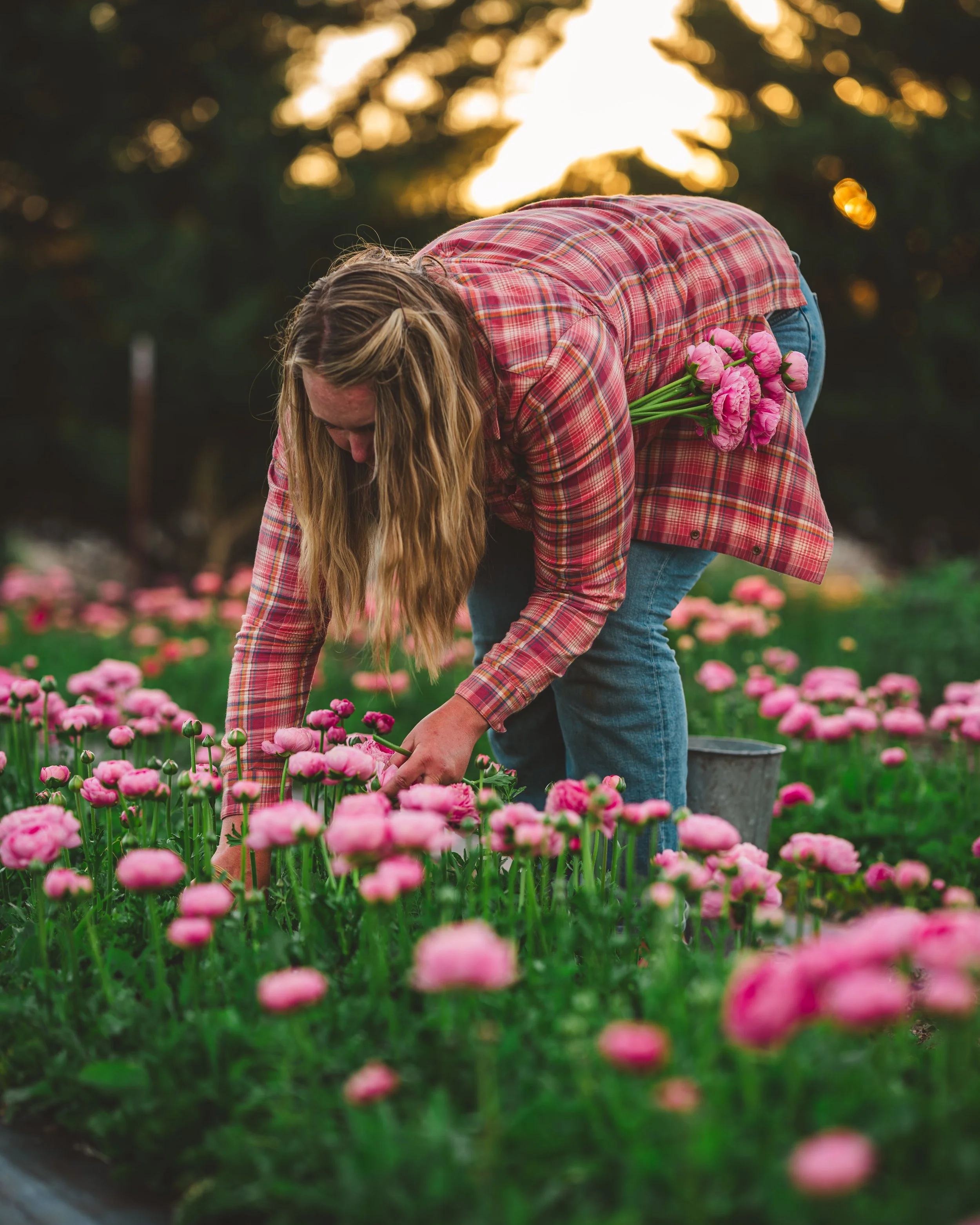
You’re Going to Need to Hustle for Your Flower Farm Dream
Time as your main currency can make for some really long days. The most budget-friendly approach is for the business owner to hustle in the beginning—this is typical for most successful businesses.
Be Careful with Hiring Too Soon
Even hiring employees too soon might sink your ship before it leaves the dock. You will be tired. You will be overwhelmed. Hopefully, you have some friends and family who are willing to help out and will take flowers as payment!
The reality is, no one is going to hustle more than you. No one is going to be more genuine in sharing your brand’s story. No one is going to have the passion and grit for your business like you do. Therefore, you need to pour your time into your budding business.
Hustle to Learn: Be Your Own Researcher
You will also need to put your own time into researching and learning—even if you take a course. Once again, everyone has a different launching point, so the research time will look different.
Affordable and Free Resources
One of my favorite free resources is Johnny’s Selected Seeds, and Bootstrap Farmer is growing in the resources they offer. Another affordable resource is Growing for Market.
Recommended Books
Book-wise, I would skip over the pretty ones and go for:
They are expensive but are my main go-to resources when I have questions on how to grow or harvest a variety properly. Every time you open the books, you will learn something new. I also like to scribble my own notes in the margins.
Get Used to Researching
If you don’t consider yourself a good researcher, start learning how to be one.
Why Research Matters
Problems will arise, and you need to be able to go down the rabbit hole and know how to find answers. When you are flower farming, you are in the trenches. Only you can make the call on:
Whether to take out a suspicious plant that may be diseased.
Why you’re seeing failure to thrive.
When to plant out and how to plan your crops in a timely fashion.
You may not be able to wait for lab results on a suspicious ranunculus plant. You have to decide whether:
The risk of planting out seedlings given weather predictions is worth it.
A plant is worth being left in the growing bed or should be ripped out because it’s not thriving.
There are resources and tools, but you ultimately need to hone your own skills for fast and thorough decision-making. In time, it gets easier, but new problems and challenges will always arise. You will be continuously adding new information to your arsenal.
Some Tasks Only Need to Be Done Once
The good news is, some of the tasks you put time into your first year should hopefully only need to be done once.
Crop planning (which will be quicker next season)
Be Patient and Stay Focused
Be patient with yourself and your allotted budget. Don’t get discouraged. Focus on your business plan, goals, and sales. Don’t compare your setup or situation to other flower farmers.
Making a Flower Farm into a Side Hustle
Making a flower farm into a side hustle or a more manageable, profitable venture is absolutely doable. To read more on that, check out our blog:
Flower Farming as a Side Hustle
All of this leads us to our last point.

Bootstrapping for Your Flower Farm
People make jokes about farmers using duct tape and baling twine as a fix-all. The thing is, you are going to have to get creative, and you might just be holding some things together with duct tape for a while.
The bottom line is, you are going to use what you have on hand and make it happen. This is bootstrapping, my friends—what flower farming on a budget comes down to. It’s all about out-of-the-box solutions.
Creative Solutions That Get the Job Done
These are not pretty or ideal, but they get it done. You won’t see mainstream flower farmers promoting these kinds of fixes, but that doesn’t mean they don’t work.
They will say a walk-in cooler is a must, but a flower farmer who has to choose between a walk-in cooler or being able to afford seeds and soil amendments is going to skip the cooler. And guess what? They make it work!
An air-conditioned room, a cool basement—they work!
For us, we invested in a deep chest freezer with an Ink Bird controller to turn it into a cooler.
Definitely not ideal, but within one farmer’s market, we made our money back by the flowers we were able to store in it all week. These days, we’ve outgrown it, but the business has now earned that walk-in cooler—which we hope to start building soon.
Affordable Alternatives to Costly Investments
Can’t afford a hoop house?
Low tunnels will be your friends!
These are less than perfect, may require more time, but are more affordable.
You might find yourself skipping kit hoop houses or propagation houses. That comes back to that convenience factor.
That’s been our story—luckily, Graham has figured out how to DIY a lot of tools and infrastructure. We figured out how to easily build our own hoop bender and propagation house, and are just now starting on finally building a high tunnel. The first two have been money makers for us with season extension and quality plant starts.
When Building Isn’t Your Strong Suit
If building isn’t your strength or isn’t possible, then patience and having a budget are going to be the name of the game. My point is, for each problem you encounter, throwing large amounts of money doesn’t necessarily have to be the absolute solution.
There is give and take—more time, less convenience, but ultimately it can be profitable and budget-friendly.
How Much Are You Willing to Give?
You will find yourself revisiting and weighing your bootstrapping solutions, and when your business has outgrown those solutions, it’s something to celebrate!
That means your business has earned the upgrades that will improve your quality of life, and cash will be more your currency than your time. That switch will slowly sneak up on you, but you will feel good about making those investments when the time is right.
You Don’t Need It All to Get Started
You do not need to have all the infrastructure. You do not need to have every book and course. You do not need to invest in luxury crops and plugs if your budget doesn’t allow for it.
Allow your business to grow with you—slowly and sustainably. Start off with the essentials to get growing and selling, while always keeping in the back of your mind:
What do I need to get to have something to sell?
Embrace the Challenges and Have Fun
Remember to always keep track of those moving pieces and get creative with your solutions. Have fun with the process and don’t get frustrated.
Embrace the challenges and where you are.
The flowers will grow.
Your business will grow—give it time, and always remember:
It can happen on a budget.
Not everyone can afford to throw tons of cash at this new endeavor, and that is okay. Own where you are and write down all your dreams and goals for your flower farm. Get it out. Then plan out your first year, staying within your means:
Your time
Your creativity

We are looking forward to sharing more blooms with you soon.
Jessica & Graham
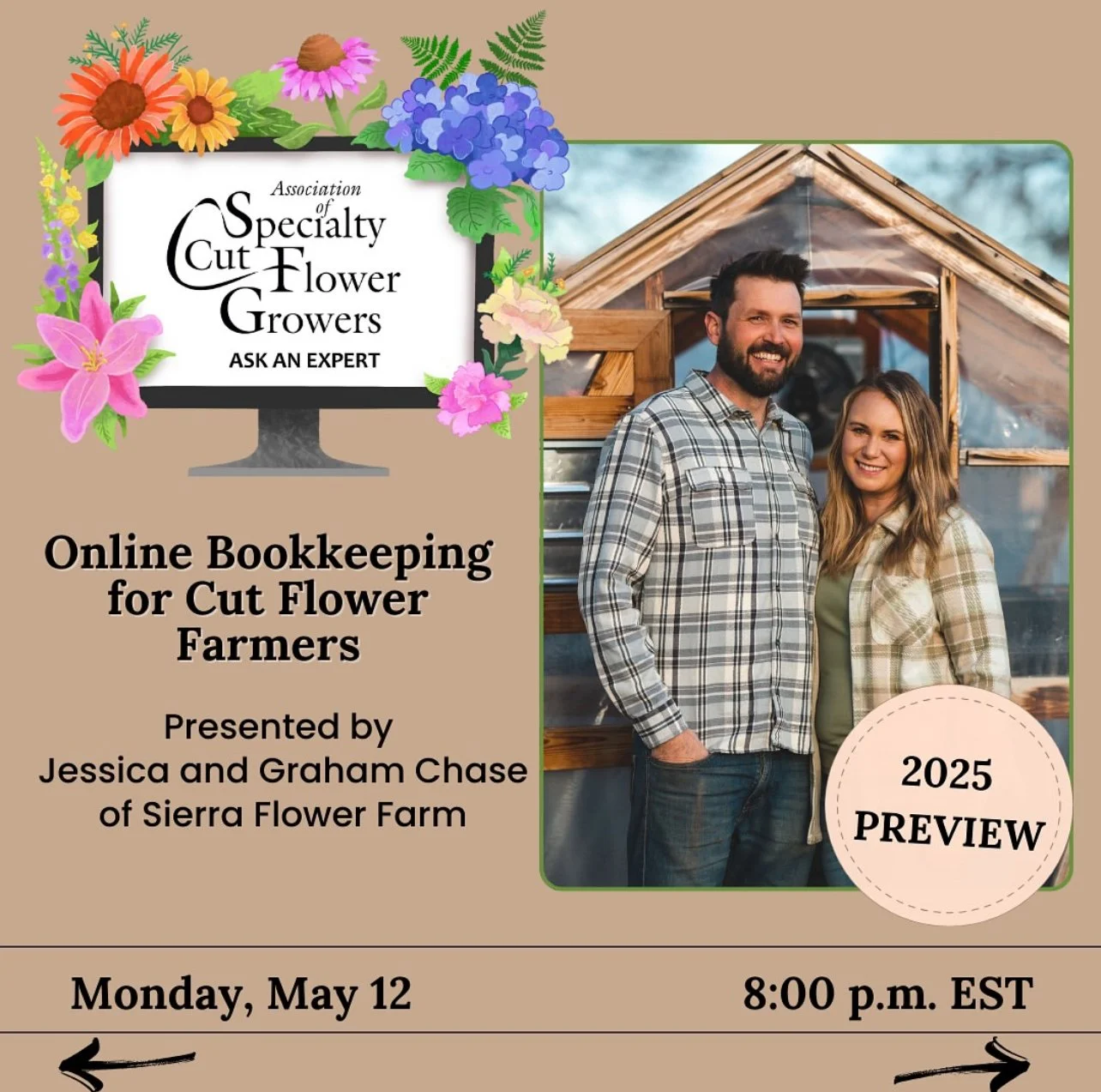
Join Us on May 12th, 2025, for ASCFG Ask the Experts!
We’re thrilled to be guest speaking on online bookkeeping as part of the Association of Specialty Cut Flower Growers (ASCFG) Ask the Experts series! Whether you're just getting started or looking to streamline your current system, we'll be sharing practical tips and insights to help keep your flower farm’s finances in top shape.
This session is exclusive to ASCFG members, so be sure to sign up today to secure your spot! We can't wait to see you there!
FAQs About Starting a Flower Farm
1. How much does it cost to start a flower farm?
The cost depends on your goals and scale. A small flower farm can start with $500–$1,000 for seeds, tools, and basic infrastructure. Larger operations may require $10,000 or more. Read more about budgeting here.
2. What are the easiest flowers to grow for beginners?
Beginner-friendly flowers include zinnias, sunflowers, cosmos, and snapdragons. They are hardy, productive, and popular for bouquets. Check out our must-grow flowers guide.
3. How much land do I need to start a flower farm?
You can start with as little as 1/8 acre or even a large backyard. The key is to maximize space with succession planting and efficient bed layouts. Read more about maximizing production for a small-scale flower farm.
4. How long does it take to start making money?
Most flower farmers start earning within their first growing season, especially with high-demand crops like dahlias and sunflowers. Profits grow as you refine your process over time. Learn how to analyze profitability for flower farmers here.
5. Do I need a greenhouse to start?
Not necessarily. While a greenhouse helps extend your growing season, many farmers begin with outdoor planting and use season extension tools like low tunnels. Learn more about season extension techniques with our guide.