Starting Strong | Essential Varieties and Tips for Your First Year of Flower Farming
Deciding to leap into the journey of flower farming brings with it a great sense of excitement and anticipation. Scrolling through seed catalogs, Instagram, and Pinterest can leave you dreaming of growing every beautiful flower you see. However, the reality is that trying to grow too many varieties at once can quickly become overwhelming, especially as you’re learning the ins and outs of flower farming.
The key to success is making strategic choices from the beginning—starting with carefully selecting the flowers you decide to grow. To set yourself up for a successful first year, focusing on varieties that are easier to grow and can nicely fill out a bouquet with minimal stems will not only have you producing gorgeous mixed bouquets but profitable ones as well.
This guide will walk you through the best flower varieties to kickstart your flower farming journey, ensuring that your first year is productive and rewarding.
This post contains affiliate links to products we use and love. If you purchase through these links, we earn a small commission at no extra cost to you—thank you for supporting our farm and content!

The Foundation of a Successful Flower Farm
Choosing Easy-to-Grow Varieties
Success in your first year comes from choosing flower varieties that thrive in your garden, are beginner-friendly, and are sought after by customers. Some experimentation will be necessary for your unique climate, but starting with reliable, fast-growing, and highly productive flowers will set you up for success. Cosmos, zinnias, and sunflowers are top choices that fill bouquets beautifully while keeping your farming experience enjoyable and profitable.
It’s also important to remember that the “best” crops for your first year depend on how you plan to sell your flowers. A farm focused on grab-and-go bouquets, farmers markets, weddings, or wholesale will each prioritize different traits—branching, stem length, vase life, or sheer volume. Rather than chasing every beautiful variety, first-year success often comes from matching your crops to your sales outlets and available labor.
If you haven’t clearly defined your product yet, this post on why deciding what you’re growing for comes before crop planning may be helpful.
Another strategy is to grow dual-purpose varieties, such as everlastings, also known as dried flowers. This approach reduces the pressure to sell all your cut stems fresh, as they can be easily dried for use in the off-season—especially if you're interested in offering wreaths for fall or the holiday season. Strawflowers are one of my go-to varieties—they’re unique in fresh bouquets, great for wedding work, and dry beautifully for off-season offerings. Other excellent options include statice, gomphrena, and bunny tail grass.
Planning for Success
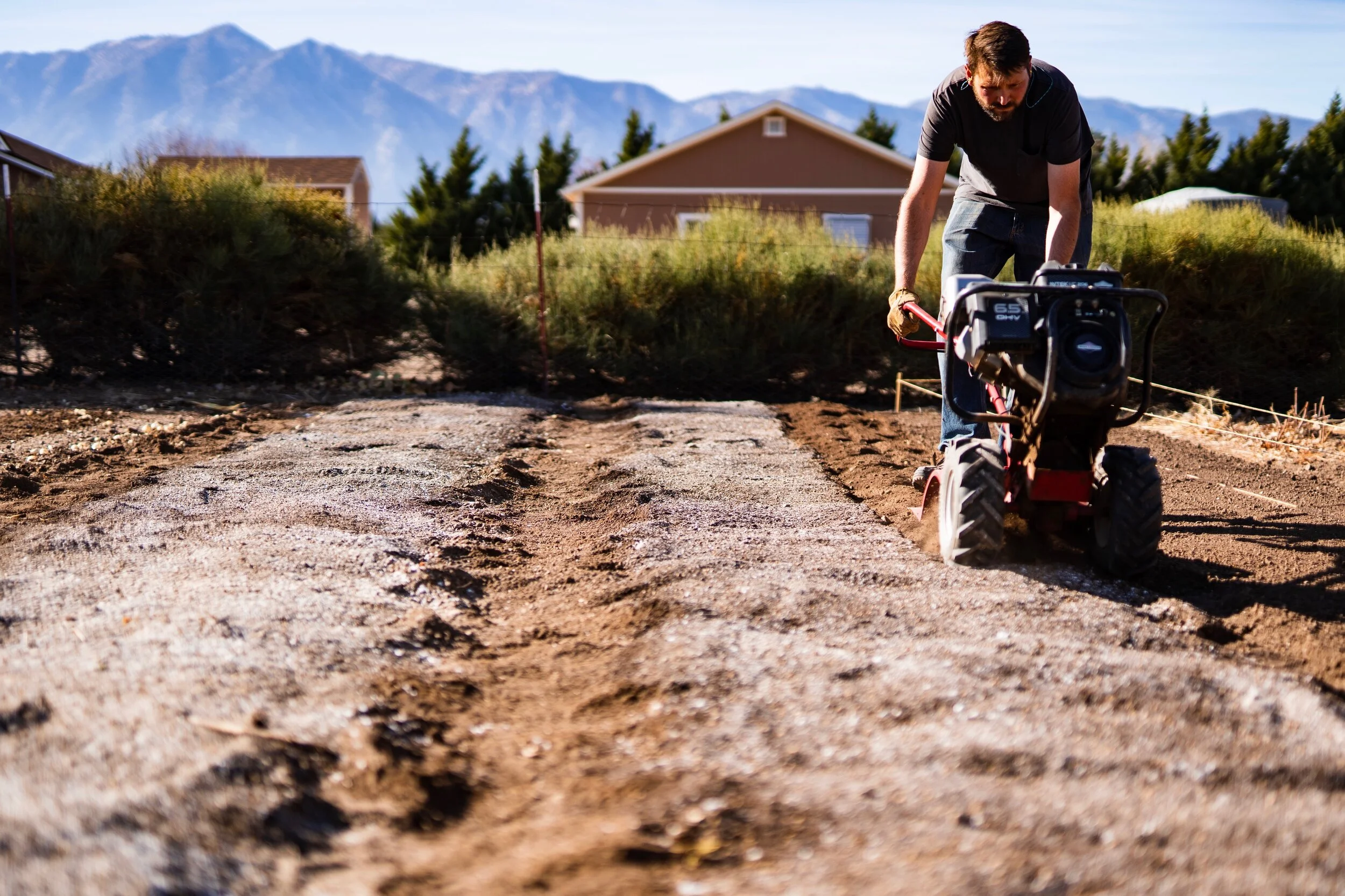
Once you’ve selected your varieties, it’s important to ensure your garden is well-prepared to support healthy growth. Soil is everything—investing in soil health is crucial. A simple soil test can remove a lot of guesswork and prevent unnecessary spending on amendments. It’s one of the most practical early investments you can make when starting a flower farm. Start by taking a soil test in the fall to guide your amendments before winter. If you miss that window, you can also do it in the spring. For more details on the timing of soil tests, refer to the Seasonal Guide to Soil Testing graphic below.
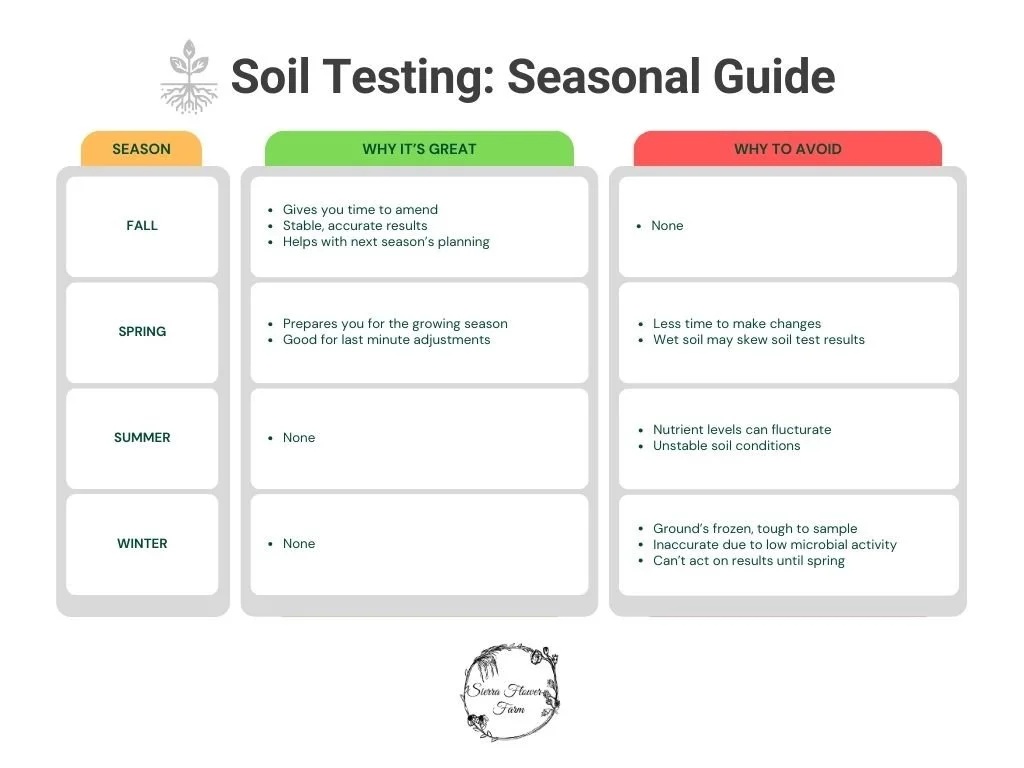
Knowing your soil’s condition helps in choosing the right flower varieties, such as opting for salt-tolerant ornamental grasses if your soil is high in salinity.
In an ideal world, every grower would start with a full lab soil test. In real life, taking any step toward understanding your soil is a win. A home soil testing kit can provide helpful insight into your soil’s baseline and guide smarter decisions as you get started.
If you want an easy, approachable place to begin, this at-home soil test kit is a solid option.
Next, consider how you’ll irrigate your crops. Even drought-tolerant plants need consistent water to establish themselves and produce quality blooms. Lastly, understanding your local climate is crucial for planning. Your USDA hardiness zone informs you about overwintering options, while knowledge of frost dates, humidity, and local pests helps you prepare for any challenges ahead.
Understanding your zone also helps determine which crops can overwinter successfully and which should be treated as annual investments.
To learn more about USDA hardiness zones in relation to cut flowers, check out our guide over on Bootstrap Farmer.
If you would like to learn more about frost dates and how those will impact your crop planning, you can read our guide on that here.
Top Varieties for a Successful First Year
One of the biggest questions first-year flower farmers often ask is, “What varieties should I start with?” In the early stages, the goal is to grow reliable crops that produce well and are easy to sell. Prioritizing varieties that establish easily, fill bouquets efficiently, and don’t require a large upfront investment can help create a productive and profitable first season.
One helpful way to approach crop selection is by thinking seasonally. Breaking your first year into spring, summer, and late summer or fall allows you to start with dependable early crops, maintain strong production through peak season, and finish the year with momentum—without adding unnecessary complexity to your crop plan.
Spring: Early Momentum
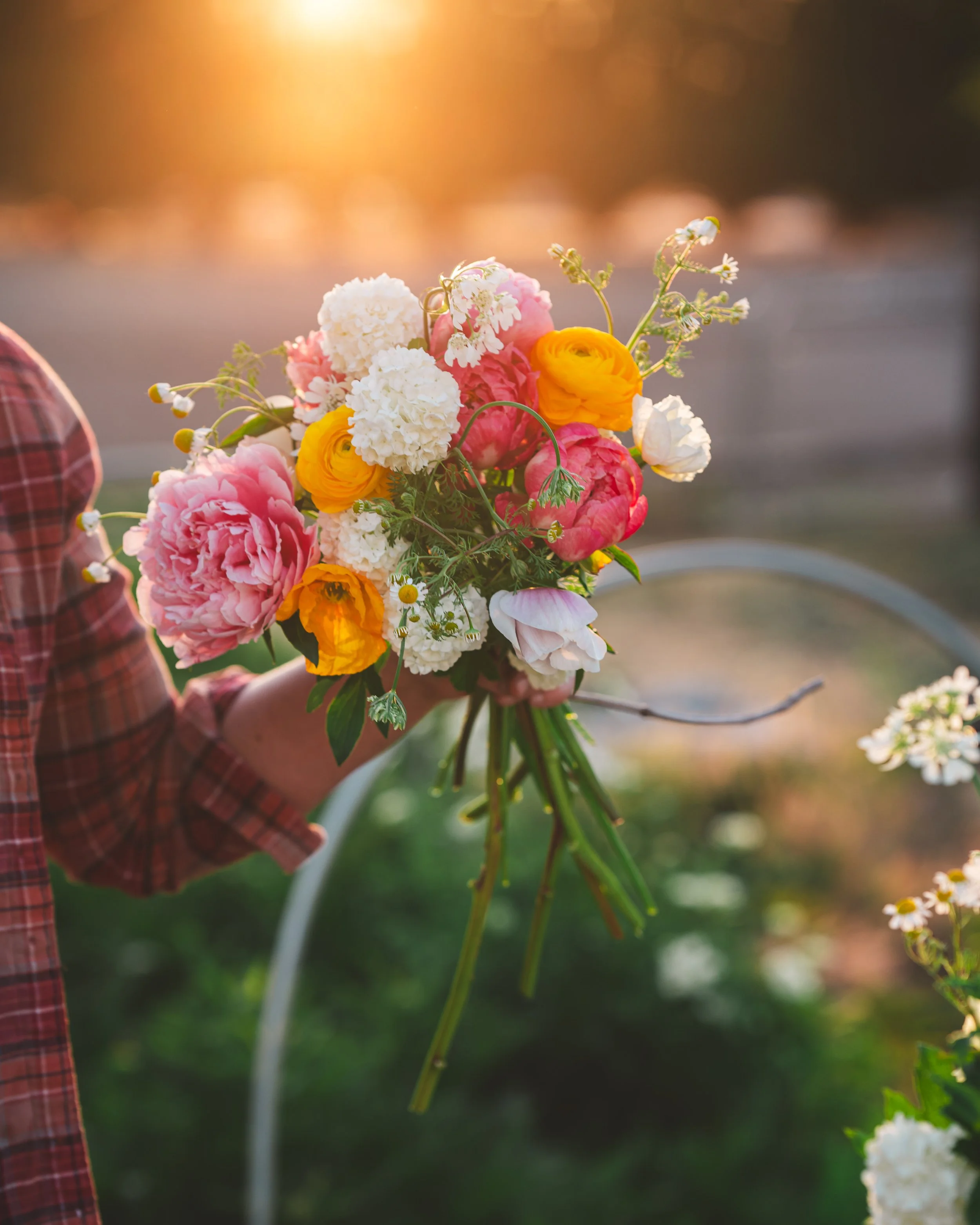
When it comes to selecting spring varieties, there are many beautiful options to choose from. Some, however, come with higher upfront costs or require more precise timing to grow well. Spring is already a busy season—especially in a first year—so starting with crops that are more affordable, forgiving, and consistently productive can help set the tone for a strong season.
Spring crops set the tone for the entire year. Choosing varieties that establish well in cool conditions and produce usable stems without excessive fuss allows you to begin harvesting early while keeping labor and decision-making manageable.
Core First-Year Crops
Bachelor Buttons (Centaurea cyanus)
Bachelor buttons are a reliable early-season filler that performs well in cool weather and can be direct sown. Rather than harvesting individual blooms, the key with bachelor buttons is harvesting full spray stems. Cutting the entire branched stem at once provides multiple flowers per harvest, creates a fuller look in bouquets, and saves a significant amount of time in the field.
Bachelor buttons are also a versatile, dual-purpose crop. In addition to being useful as a cut flower, they are edible and can be used as a garnish or pressed flower. They also dry well, making them a good option for growers interested in dried arrangements or off-season products. Their early blooms are attractive to beneficial insects, adding another quiet benefit in the spring garden.
Ammi
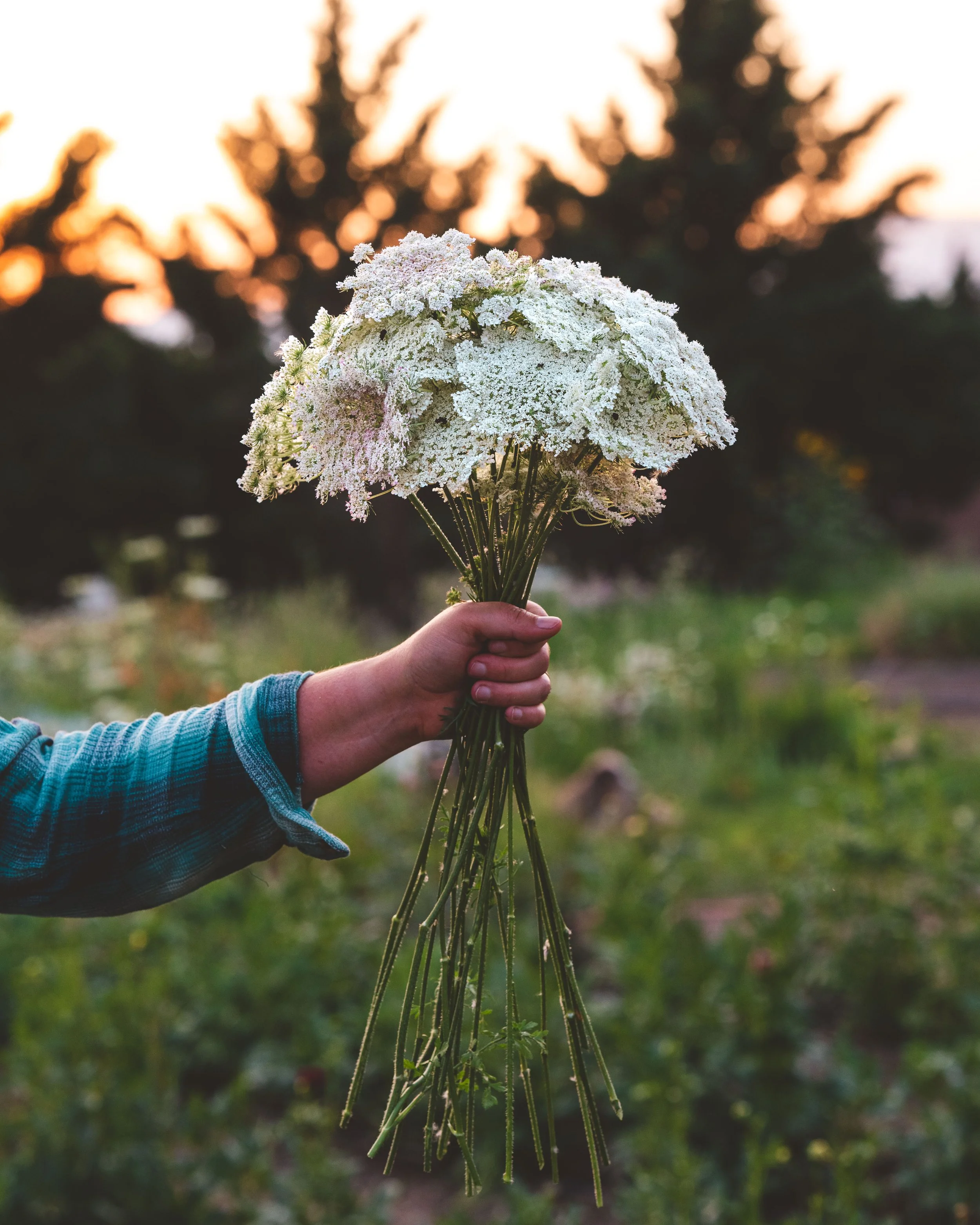
Ammi, commonly known as Queen Anne’s lace, is a spring staple for many flower farms thanks to its airy, lace-like umbels and ability to quickly fill out bouquets. While it may resemble wild Queen Anne’s lace, foraging is not recommended. Ammi closely resembles poisonous plants such as hemlock, making intentional cultivation a far safer and more reliable option for cut flower production.
Growing & Planting
Ammi prefers to be direct sown and thrives in cooler spring conditions. Some growers sow seeds in late fall or winter, allowing them to germinate naturally as conditions warm. In our fields, volunteer ammi often appears on its own in early May. To better control bloom timing, we typically start ammi in propagation trays with ample root space and transplant, resulting in more predictable blooms from late May into early June.Harvest Timing Matters
Harvest timing is especially important with ammi. Cut too early and stems will wilt; wait too long and the flowers will shed heavily. Harvesting when the umbels are fully open but still firm produces the best results. As the season progresses, ammi also produces beautiful seed heads that can be used as textural elements in fresh designs or dried. We’ve used dried ammi seed heads successfully in wreaths and fall arrangements.Extending the Season: Dara & Green Mist
For growers looking to extend this look beyond spring, there are a few excellent alternatives. Dara (Daucus carota), often called chocolate lace flower, offers a similar umbel form with added color variation, including blush, mauve, and deep burgundy tones. Dara is more heat tolerant than ammi and typically begins blooming in early summer. With interval planting, it can continue producing well into warmer months and toward frost.Another option is Green Mist (Ammi visnaga). While less delicate and lacy than Queen Anne’s lace, it has a sturdier structure and subtle green hue, making it a reliable performer as temperatures rise.
Together, these umbel flowers provide strong bouquet-building value, seasonal flexibility, and multiple design uses—making them a smart choice for first-year growers.
Snapdragons
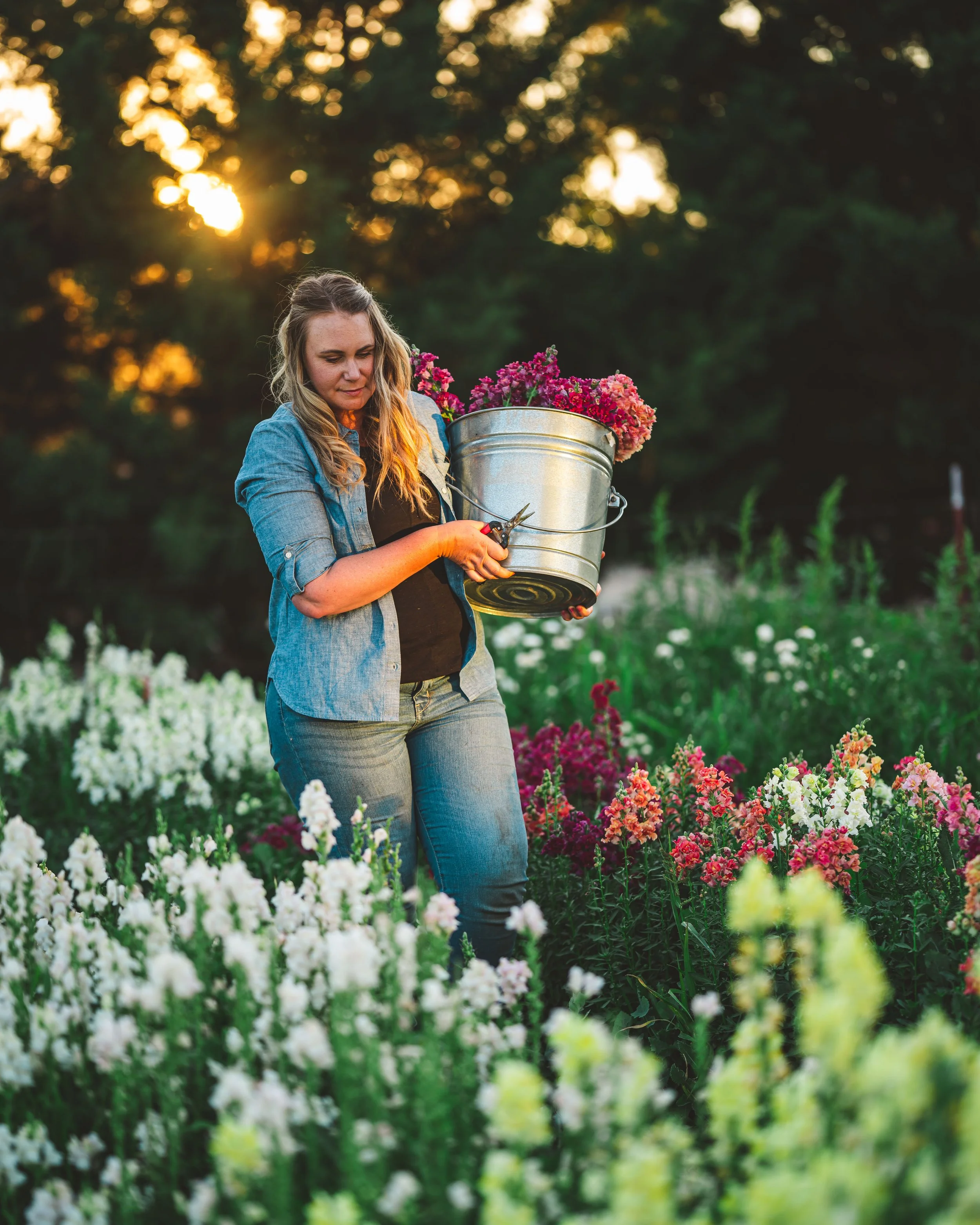
Snapdragons are one of the most dependable early-season crops for first-year growers. They offer strong vase life, broad customer appeal, and excellent vertical structure in bouquets. Once established, snapdragons reward regular harvesting with consistent production.
For a deeper look at planting, spacing, and harvest timing, read our snapdragon growing guide.
Calendula
Calendula is one of the most approachable spring flowers for first-year growers. It’s cold-tolerant, easy to direct sow, and begins blooming early in the season. For cut flower production, variety selection matters—taller varieties such as Ivory Princess or Flashback are better suited for harvesting than compact landscape types.
Planting calendula closer together can also help encourage longer, more usable stems. Calendula works well in mixed bouquets, sells easily at market, and can also be used for value-added products, making it a versatile addition to a new flower farm.
If you’d like to learn more about growing calendula specifically for cut flower production, we’ve shared a detailed guide here.
Sweet Peas
Sweet peas are a favorite for many growers because of their fragrance, delicate blooms, and strong customer appeal. While they do require trellising and regular harvesting, they are well-suited to cool spring conditions and can produce generously when maintained. For growers willing to add simple support, sweet peas can be an especially rewarding spring crop.
We’ve written a full guide to growing sweet peas for cut flowers if you’d like more detailed instructions here.
Anemones
For growers interested in spring focal flowers, anemones offer a gentle introduction. While they still benefit from cool conditions and thoughtful timing, anemones tend to be more forgiving than other spring focal crops. Many growers find that they provide valuable experience with planting, spacing, and harvest timing before moving on to more demanding spring focal varieties.
For more on planting, timing, and harvesting anemones, see our anemone growing guide.
Spring Level-Up Options
As your experience, infrastructure, or willingness to manage more precise conditions grows, some spring crops are worth considering more intentionally. These crops can be incredibly rewarding, but they benefit from thoughtful planning and realistic expectations.
Ranunculus
We were initially on the fence about moving ranunculus out of the core crop list, simply because it has been such a foundational crop on our farm from the very beginning. While ranunculus does require closer attention to timing, temperature, and soil conditions, when its needs are met, it is incredibly productive. In our experience, ranunculus has consistently been our number one selling flower—both as a stand-alone bunch and as the focal point in mixed bouquets.
Compared to anemones, ranunculus can be less forgiving of weather swings and soil issues, but the payoff is significant. If you’re willing to give it a try and intentionally make space for it, ranunculus can be a powerful spring crop even on a small scale.
For a deeper look at how we grow ranunculus and manage it successfully, see our ranunculus growing guide.
Peonies
Peonies are a long-term investment rather than a first-year return. While they won’t provide immediate payoff, they can become a cornerstone spring crop over time for growers thinking several seasons ahead. They are best added once your farm has more established beds and longer-term planning in place.
Tulips & Fancy Daffodils
Specialty tulips and daffodils offer strong early-season demand and can be an appealing spring crop, but they also come with real challenges. Tulips are highly dependent on specific conditions at each stage of growth—rooting, vegetative growth, and bloom—and crop loss is common when weather or soil temperatures fluctuate unexpectedly.
Even when planting a mix of early, mid, and late-season varieties, tulips can sometimes come on all at once or bloom shorter than expected, which can be frustrating and difficult to plan around. These challenges are common, even among experienced growers.
For this reason, many professional growers choose to grow tulips hydroponically rather than in the field. Hydroponic production allows tulips to be programmed and grown under more controlled conditions, resulting in more predictable timing, consistent stem length, and reduced weather-related risk.
We’ve shared a detailed guide to hydroponically growing tulips that walks through this approach in more detail.
While tulips and daffodils are typically a one-time harvest and require a higher upfront investment, they can still be a strategic crop when planted densely, grown during a quieter time in the field, and cleared in time for summer plantings—especially when approached with realistic expectations.
Iceland Poppies
Iceland poppies offer airy stems and a soft, romantic look that’s especially popular in spring arrangements. They prefer cooler conditions and careful harvest timing, making them a better fit once growers have a feel for their spring weather patterns.
For more on growing and harvesting Iceland poppies for cut flower production, see our Iceland poppy growing guide.
These crops benefit from additional planning, infrastructure, or patience, and many growers add them intentionally once they understand their spring conditions, available space, and market demand.
Summer: Volume, Consistency & Flexibility
Summer is when most flower farms hit their stride. Beds are full, harvests are frequent, and the focus shifts to maintaining steady production while meeting peak-season demand. For first-year growers, summer crops that grow quickly, repeat well, and fill bouquets efficiently can make a big difference—especially when space and labor are limited.
Core First-Year Crops
Zinnias
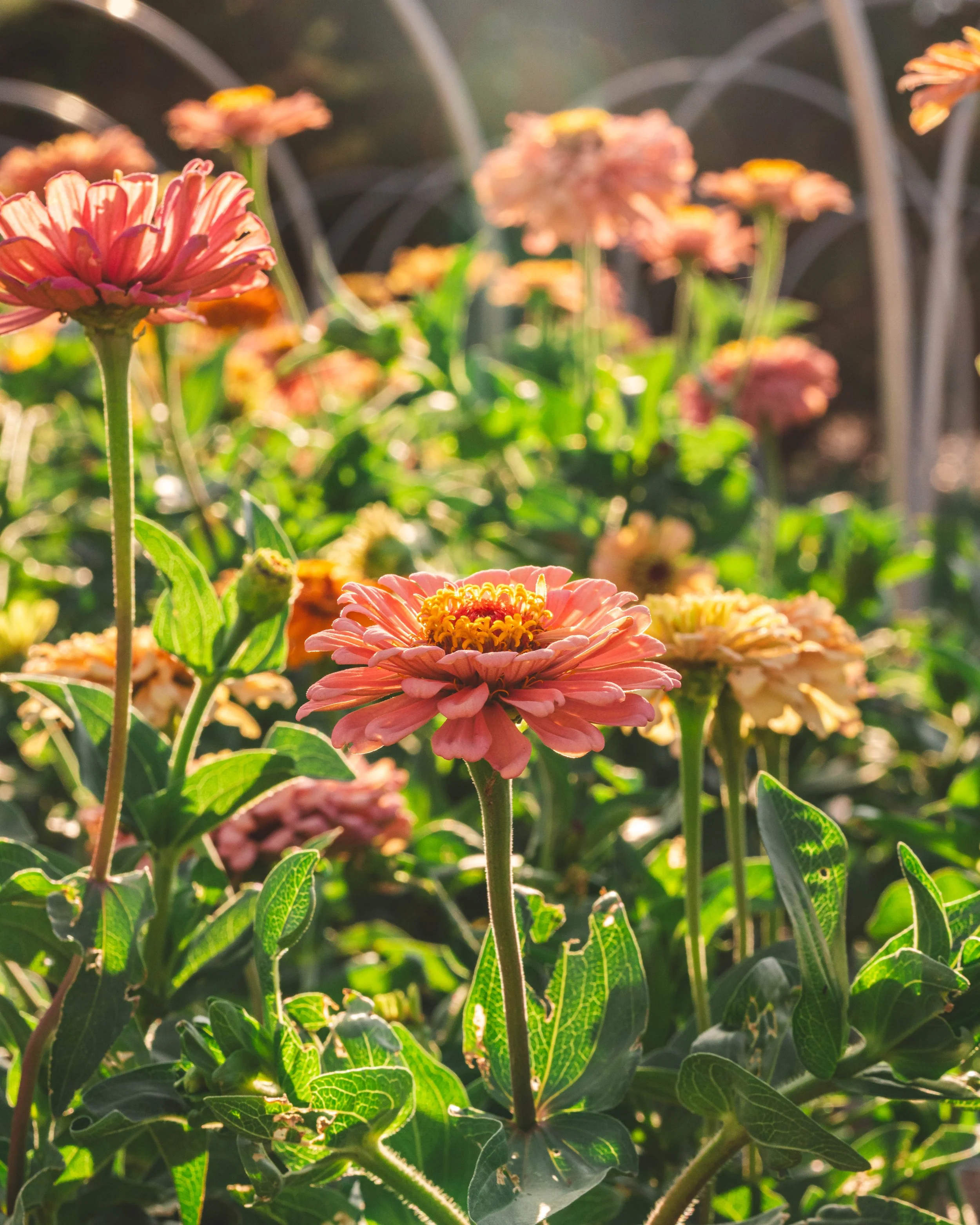
Zinnias are one of the most versatile and productive summer crops you can grow. With an incredible range of colors, shapes, and sizes, zinnias can play multiple roles in a bouquet—from focal flowers to supporting filler. They are fast growing, respond well to regular harvesting, and thrive in warm conditions.
For more on variety selection, spacing, and harvest timing, read our zinnia growing guide.
Cosmos
Cosmos are a reliable summer staple and an especially useful crop if you find yourself short on foliage. In addition to their airy blooms, cosmos foliage acts as an easy design “hack,” providing a light, ferny texture that holds up well in arrangements. Earlier successions are particularly valuable for filling bouquets before heavier summer foliage comes on.
For more detail on succession timing, spacing, and harvesting cosmos for cut flower production, see our cosmos growing guide.
Single-Stem Sunflowers
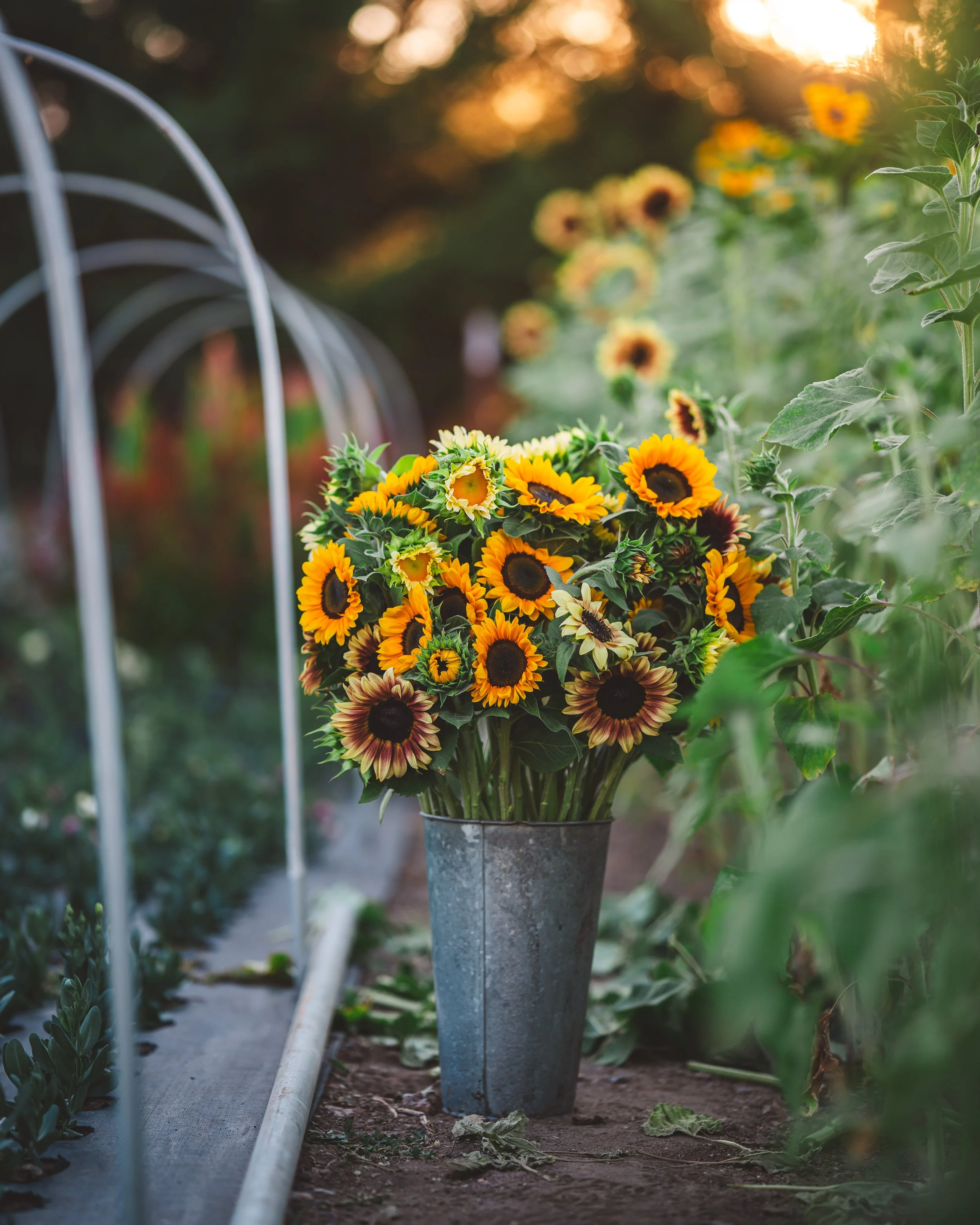
Single-stem sunflowers are a cornerstone summer crop for many small-scale farms. They grow quickly, fill bouquets efficiently, and are easy to plan around. We’ve found lighter and softer sunflower colors work especially well earlier in the season, while continuing successions into late summer allows darker, moodier varieties to bloom right as the market shifts toward fall—typically from September through frost.
Single-stem sunflowers such as ProCut and Vincent series aren’t cut-and-come-again, but their fast turnaround and strong visual impact make them an excellent use of space in summer production.
For a straightforward overview of how to approach this, see our simple guide to succession planting for cut flowers.
Grasses
Grasses are often overlooked, but they add movement, texture, and contrast to summer bouquets. Varieties like Frosted Explosion are especially useful and easy to incorporate into both fresh designs and later-season arrangements. Grasses quietly do a lot of work in mixed bouquets with very little input once established.
Everlastings: Statice & Strawflower
Statice and strawflower are excellent summer crops that pull double duty. They sell well fresh during the growing season and can be dried to extend offerings into fall and winter. For first-year growers interested in maximizing value from a single planting, everlastings offer flexibility and a longer sales window.
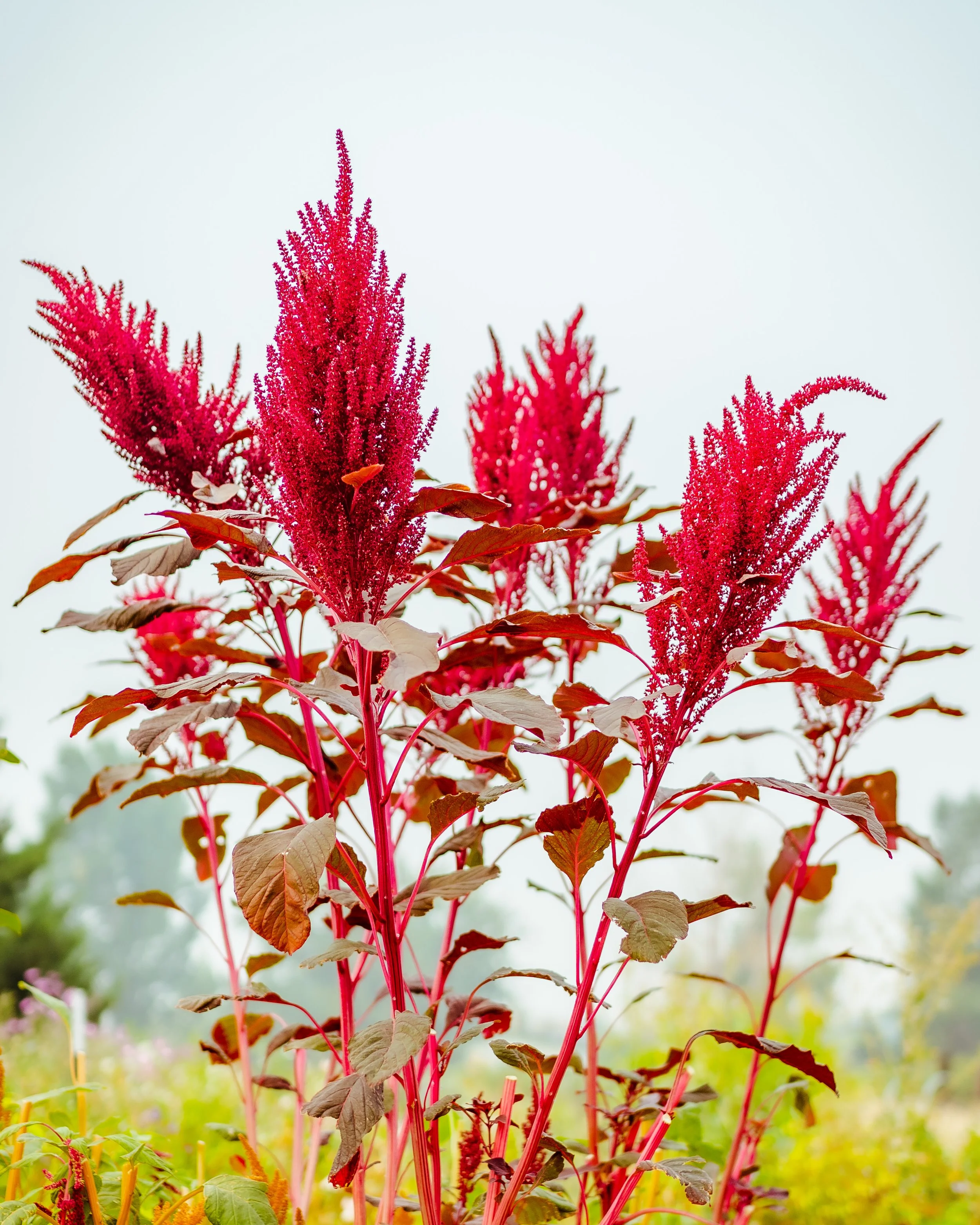
Amaranth
Amaranth is a bold, high-impact filler that adds drama and texture to summer and fall arrangements. Upright varieties are especially useful for filling space in bouquets quickly and pairing well with sunflowers, zinnias, and grasses as the season progresses.
Summer Level-Up Options
As your farm grows or your focus shifts toward event work, some summer crops are worth considering more intentionally.
Garden Roses
Garden roses can be a meaningful upgrade for farms moving toward weddings and event design. They offer unmatched beauty and fragrance but require more space, pruning, and patience than most summer annuals. Many growers add roses gradually once their production rhythm and market demand are well established.
Late Summer & Fall: Finishing the Season Strong
Late summer and fall are when flower farms lean into richer color palettes, bolder textures, and statement-making blooms. This part of the season rewards growers who have maintained consistent summer successions while intentionally layering in crops that bring depth, movement, and a distinctly autumnal feel to their offerings.
Core First-Year Crops
Dahlias
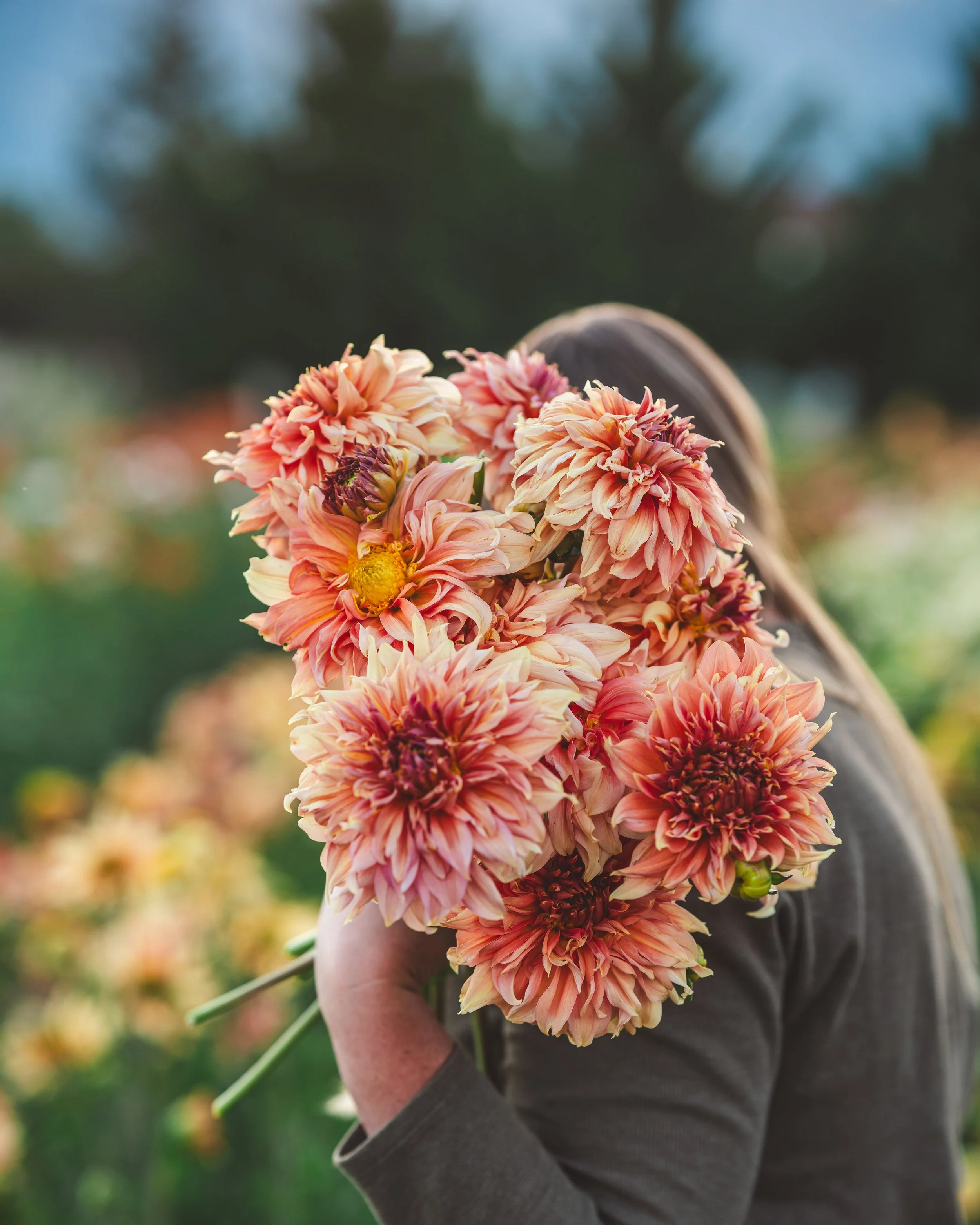
Dahlias deserve a central place in late summer and fall production and are often one of the most desirable flowers for customers. While they’re sometimes viewed as a “level-up” crop, many affordable varieties make it possible for first-year growers to begin experimenting without a major investment. Dahlias offer unmatched diversity in color, form, and size, allowing them to anchor bouquets and elevate designs throughout the fall season.
As experience grows, dahlias can become true focal powerhouses. Their productivity, strong customer demand, and design versatility make them one of the most impactful crops a flower farm can add when managed intentionally.
For a deeper look at how we grow dahlias—from variety selection to harvest—see our dahlia growing guide.
Sunflowers
Continuing sunflower successions into late summer and fall allows you to meet shifting market preferences as colors deepen and designs become moodier. Darker varieties often shine from September through frost, pairing beautifully with dahlias, grasses, amaranth, and fall foliage. This is also a great time to introduce branching sunflower varieties, which add texture and complexity beyond a single bloom. Varieties such as Lorenza, Starburst Panache, and Red Wave bring visual interest and elevate late-season bouquets with very little extra effort.
Sunflowers remain an efficient, high-impact crop through the end of the season, offering both reliability and creative flexibility.
Grasses, Amaranth & Continuing Summer Crops
Late summer and fall are ideal for leaning into grasses, bold textures, and crops that help maintain volume as the season shifts. Grasses and grain-like fillers such as bunny tail grass, feathertop grass, millet, and Frosted Explosion add movement and softness to arrangements while transitioning naturally from summer into fall. These crops perform well in warm conditions, are excellent for building contrast in mixed bouquets, and many can also be dried, extending their usefulness beyond the fresh season.
Amaranth becomes especially valuable during this time as well. Upright varieties in deeper, moodier tones bring strong vertical interest and visual weight to fall arrangements, pairing beautifully with dahlias and sunflowers.
Later successions of summer workhorses—such as zinnias, cosmos, and gomphrena—often continue producing into fall, especially in milder climates. These familiar crops help maintain consistency and volume while allowing fall-specific textures and focal flowers to take center stage.
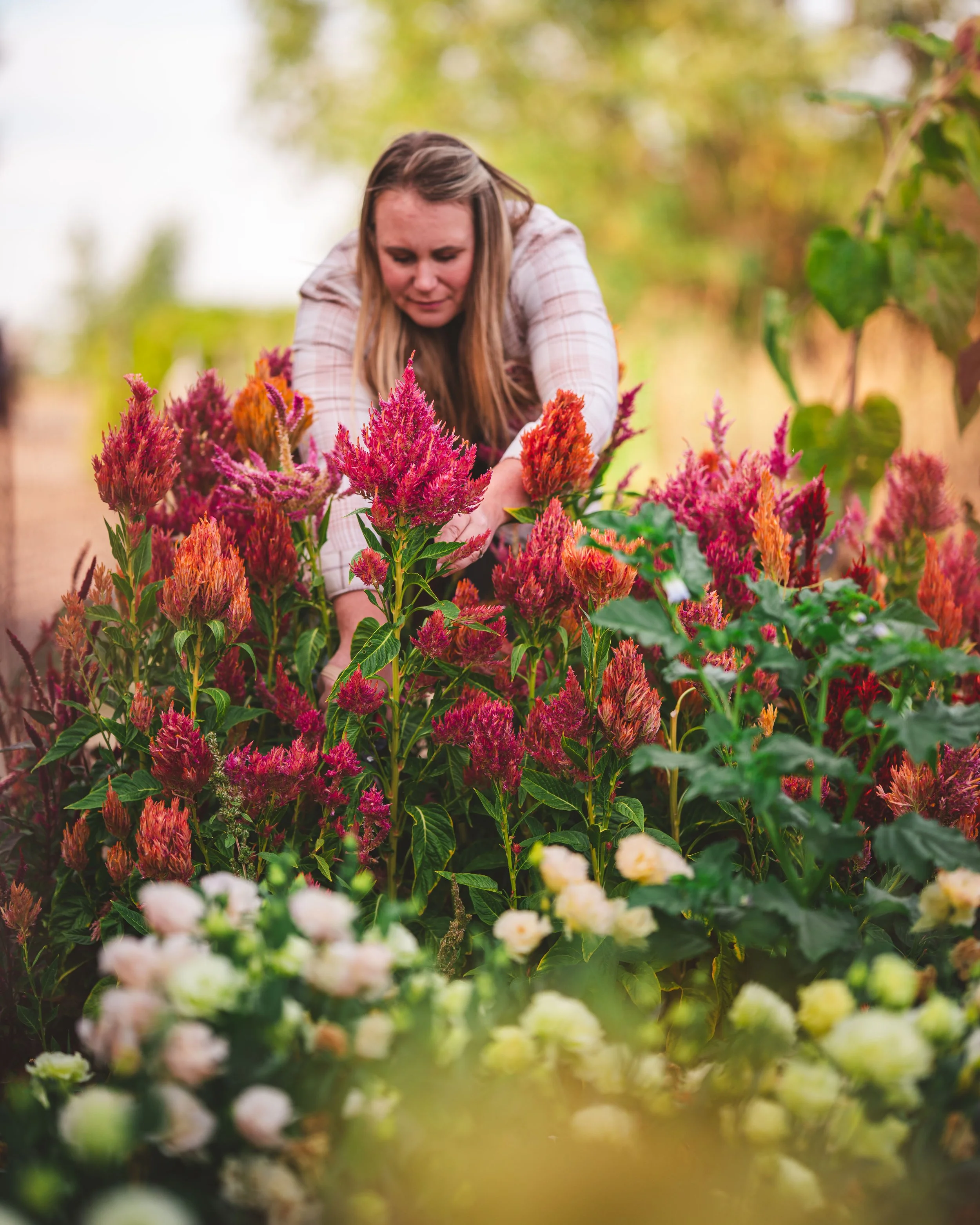
Celosia
Celosia adds richness, structure, and saturated color to fall arrangements and performs well late into the season. It works beautifully both fresh and dried, making it an excellent dual-purpose crop for extending offerings beyond the main growing season.
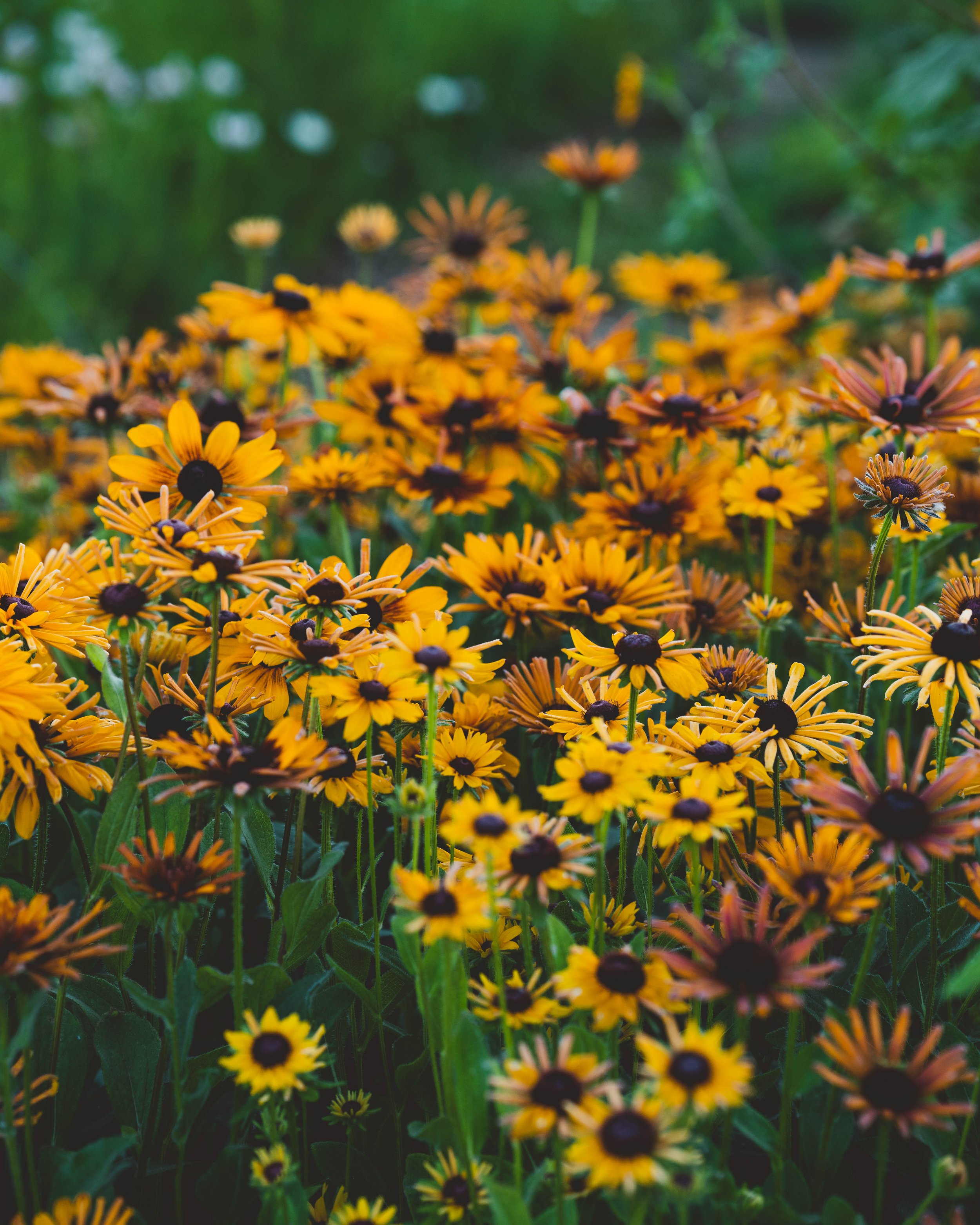
Rudbeckia
Rudbeckia brings unmistakable fall character to the field and bouquet. Varieties such as Sahara and Chim-Chiminee introduce warm, earthy tones and dramatic texture that pair especially well with dahlias, grasses, and darker sunflowers.
Late-Season Level-Up Options
Some fall crops benefit from longer timelines, added infrastructure, or additional space.
Foliage & Specialty Accents
Scented geraniums are a favorite fall foliage crop, adding a surprising, spring-like fragrance to bouquets dominated by flowers that aren’t typically scented. Vegetable and fruiting branches—such as Hyacinth Bean ‘Ruby Moon’, currant tomato vines, and tomatillos—can also be incorporated as unique accents that add interest and seasonality to fall designs.
Thornless raspberries can be an especially striking addition, but they require more space and long-term planning, making them better suited as a later investment.
Dusty Miller & Sedum
Dusty Miller continues to earn its place late in the season, working beautifully in both fresh and dried arrangements. Its silvery foliage pairs well with fall palettes and adds contrast to richer tones. Sedum is another worthwhile upgrade, offering sturdy stems and late-season interest, though it benefits from advance planning and established beds.
Heirloom Chrysanthemums
Heirloom mums are typically grown from cuttings and require many months in the ground before blooming. Because they often come into flower as frost risk increases, additional infrastructure such as hoop houses or low tunnels is often needed to protect blooms and extend the harvest window.
Lisianthus
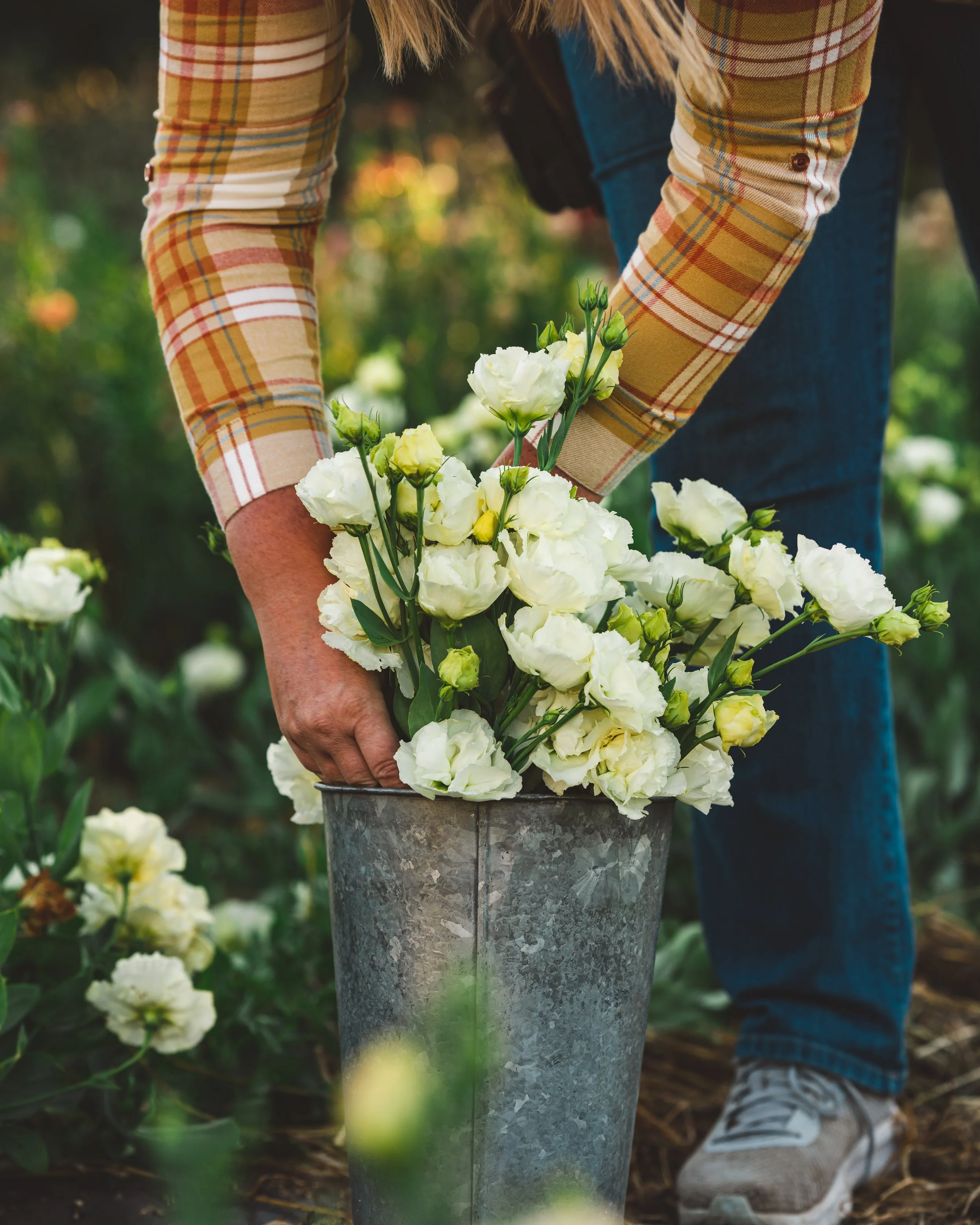
Lisianthus is one of the most valuable cut flowers a grower can produce, but it requires patience and long-term planning. Whether started from seed or purchased as plugs, lisianthus occupies bed space for an extended period before producing. For small farms with limited space, it’s best added once production rhythms and infrastructure are firmly in place.
A Note on Limited Space, Crop Selection, and Early Growth
When we first started flower farming, we were working with roughly 2,500 square feet of growing space. With limited beds, every crop choice mattered. Our early planting strategy wasn’t about growing everything—it was about choosing crops that worked hard for us.
A few principles guided our decisions:
Pack beds intentionally. In a small space, closer spacing and thoughtful layout can dramatically increase output, especially for crops grown for cut flower production rather than landscape use.
Prioritize quick turnaround crops. Fast-growing flowers allow you to harvest sooner, replant more often, and adjust as the season unfolds.
Choose crops that fill a bouquet efficiently. Single-stem sunflowers were a staple for us early on. While they aren’t cut-and-come-again crops, they grow quickly, fill space efficiently, and provide instant volume in bouquets.
Be strategic with higher-investment crops. Tulips are a good example of a middle-ground crop. While they require a higher upfront investment, they can be planted densely, grow during a quieter time in the field, and finish in time to transition beds into summer crops.
Watch out for “bed hogs.” Some crops take up valuable bed space for long periods while producing relatively low output. These can be wonderful crops, but in a first year—especially with limited space—they’re often better added later.
Starting lean and practicing restraint early on made it easier for us to scale sustainably and profitably over time. Limited space naturally forces efficiency, and those lessons tend to carry forward even as your farm grows.
For a deeper look at strategies for getting the most out of a small growing space, we’ve shared more about our approach in our guide to maximizing production.
Tips for a Thriving Flower Farm
A successful first year isn’t just about what you plant—it’s about how you manage timing, harvest, and systems throughout the season. Thoughtful practices around succession, ecology, and harvest quality can make a noticeable difference in both flower performance and long-term sustainability.
Succession Planting
Succession planting helps ensure a steady supply of blooms rather than feast-or-famine harvests. Staggering plantings allows you to respond to demand, manage labor more evenly, and keep beds productive throughout the season.
For growers ready to take succession planning a step further, we’ve shared a more in-depth guide on advanced succession strategies for cut flowers.
Companion Planting
Companion planting isn’t just for vegetable gardens. Many flowers can help deter pests, attract beneficial insects, and support a healthier growing environment overall. Marigolds, for example, are known to deter pests such as thrips, caterpillars, and whiteflies, while also acting as trap crops that draw aphids away from more valuable plants.
Other flowers—such as calendula, sunflowers, and yarrow—serve double duty as cut flowers while encouraging predatory beneficial insects. While pollinators will visit most flowers, we’ve found that cosmos, scabiosa, honeywort, and zinnias are especially effective at creating a lively, balanced field ecosystem.
Harvesting for Optimal Vase Life
Learning when and how to harvest each crop has a direct impact on quality and longevity, but vase life is influenced well before clippers ever hit the field. Plant health, consistent hydration, and overall growing conditions all play a role in how well flowers hold once they’re cut. Stressed plants—whether from inconsistent watering, nutrient imbalance, or heat—are far less likely to perform well in the vase.
Some flowers, such as cosmos, are best harvested at the swollen bud stage, while others—like dahlias and zinnias—should be more open at harvest. Certain varieties benefit from the “wiggle test,” where the flower head stays firm when gently shaken; zinnias and rudbeckias are good examples.
While each crop has its nuances, a few best practices apply across the board:
Harvest when plants are well hydrated, ideally during the cool parts of the day—early morning or evening.
Cut healthy, actively growing stems. Flowers coming from vigorous plants consistently outperform those harvested from stressed or struggling crops.
Place stems immediately into clean water after cutting. Depending on your water source, a holding solution may be helpful, though we typically harvest directly into plain, fresh water.
Use sharp, clean clippers to ensure a clean cut and reduce stress on both the plant and the stem.
Allow flowers to hydrate fully before designing, giving them time to take up water and release field heat. A minimum of three hours is ideal.
Use a cooler if possible. Even a small floral cooler or commercial refrigerator can significantly extend vase life. If a cooler isn’t available, store flowers in a dark, air-conditioned space and avoid holding them for extended periods.

Starting your flower farming journey can be both exciting and challenging, but success in the first year often comes from restraint as much as ambition. Focusing on reliable, high-quality varieties and building simple, repeatable systems allows you to learn quickly while still producing flowers people want to buy.
Every season is a learning experience. Paying attention to timing, plant health, harvest practices, and how your crops perform in your unique conditions will shape smarter decisions year after year. Whether you’re planting your first zinnias or refining succession plans, each season builds toward a flower farm that grows sustainably—alongside your confidence, skills, and vision.

We are looking forward to sharing more blooms with you soon.
Jessica & Graham