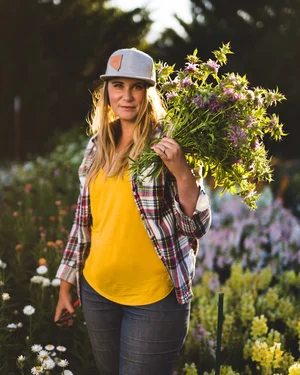
Wreath Making for the Flower-Farmer-Florist
How to streamline production, boost winter income, and keep your creativity alive through the holidays
The first snow always feels a little magical — the fields are quiet, and for many of us, it’s time to trade bouquets for evergreen wreaths.
If you’re a flower farmer or florist, wreath making can be one of the most rewarding ways to stay creative (and profitable) in the off-season. Holiday offerings like wreaths, amaryllis, and winter greens not only help you use leftover dried materials from the field, but they also keep your name top of mind with customers when fresh flowers aren’t in bloom.
When I first started, I made every wreath by hand, wiring bundle after bundle until my fingers cramped. The results were beautiful, but the process was slow and unsustainable as orders grew. I loved the artistry, but not the time it took away from family and rest before spring planning began.
That’s when we realized we needed a better system — one that could keep the handcrafted quality but cut down the production time. Whether you’re hand-wiring or ready to invest in a wreath clamp machine, this guide walks you through the workflow, sourcing, and pricing strategies that make wreath-making both efficient and enjoyable.
Note: This post contains affiliate links. If you make a purchase through these links, we may earn a small commission at no additional cost to you. Thank you for supporting our farm!

Choosing Your Method: Hand-Wiring vs. Clamp Machines
If you’ve ever spent an entire day hand-wiring wreaths, you know the toll it takes — sore fingers, wire pokes, and the creeping dread of a full order list still waiting. Hand-wiring is timeless and meditative, and for small runs or custom pieces, it’s a beautiful way to work.
But as production grows, efficiency starts to matter as much as artistry. That’s where the wreath clamp machine comes in.
Why We Switched
After a few seasons of hand-wiring every order, I knew we needed a method that could keep the same handcrafted look while cutting production time. Switching to a clamp machine completely changed that for us.
The clamp machine lets you skip individual wiring, which means:
Faster production — wreaths take a fraction of the time.
Less strain on your hands and wrists.
More consistency and durability — no loose bundles falling apart as the greens dry.
It’s also a win for customer satisfaction. I’ve had multiple customers tell me their wreaths survived failed hooks or windstorms — the clamps hold tight!
A Worthwhile Investment
Beyond comfort and speed, this upgrade elevated our product from handmade and homegrown to professionally produced. It’s one of those tools that pays for itself in both efficiency and confidence.
We purchased the clamp machine hardware from Mitchell Wreath Rings and built the table ourselves from scrap lumber. Within a few hours, it was ready to use — proof that it doesn’t have to be complicated to feel like a total upgrade.
You’ll also need wreath clamp bases, which come in a range of shapes and sizes. We use the standard 14-inch base for most designs, sourced from Mitchell’s or Santa’s Supply.
Pro Tip: Whether you’re hand-wiring or clamping, the goal is the same — to build wreaths that are sturdy, profitable, and true to your design style. Choose the method that fits your scale and workflow best.

Selling Wreaths: The Business Side
Should You Sell Holiday Wreaths?
If you’re on the fence about adding wreaths to your offerings, here’s my honest take: it’s worth it — as long as you plan ahead.
Wreaths extend your selling season when cash flow usually slows down, while giving you a creative outlet in the quieter months. They’re also a great way to stay connected to your customers and remind them of your work before spring blooms return.
That said, it’s easy to burn out. The key is finding a balance between what’s profitable and what’s manageable. Think of wreaths as your homestretch crop — one last push before winter rest.
If you have it in you to keep going a few more weeks, those sales can set you up for a worry-free winter.
When to Start Taking Orders
There’s no single “right” time to launch wreath sales — it depends on your market, scale, and how you like to structure your season. The goal is to open orders during that sweet spot when everyone is just starting to get into the holiday spirit — not so early they forget about it, and not so late they’ve already bought elsewhere.
Think of it like the Mariah Carey effect — she’s officially “thawed” the day after Halloween, but most people don’t start decking the halls for a few more weeks.
Some flower farmers and florists like to open early-bird preorders in late October or early November, especially if they plan to ship wreaths, offer multiple pickup dates, or need early numbers for ordering greens. Others wait until mid- to late November, when customers are ready to decorate and holiday spending is in full swing.
We’ve found that opening wreath sales the week before Thanksgiving works best for our market. By then, people are in a festive mindset, but it’s still early enough to plan pickup around Thanksgiving gatherings and small business holiday events. It also helps us avoid over-purchasing materials and keeps our workflow focused and efficient.
Once our limited number of wreaths sells out, we move on from wreath-making for the season — a rhythm that works well for our scale and sanity.
No matter your timing, the key is to set clear expectations early. Announce sales, pickup details, and preorder windows on your website, social media, and through your email list. Consistent communication keeps customers excited and prevents last-minute overwhelm.
How to Price Your Wreaths
Pricing wreaths can be one of the trickier parts of the process — especially when you see big-box stores advertising theirs for $20. The key is to remember that those aren’t your competitors.
As a small-scale grower or florist, your wreaths are handcrafted, made with higher-quality ingredients, and reflect the time, design eye, and care that go into each one. The goal isn’t to be the cheapest — it’s to be profitable and sustainable.
Your pricing will naturally vary based on:
Materials: Premium evergreens, magnolia, or holly branches cost more than basic components. Specialty accents like dried flowers, citrus, or pine cones also raise the total.
Design style: Fuller, more intricate designs or custom orders deserve a higher price point than simple, production-style wreaths.
Market and audience: What your local market can support — and what your customers are willing to spend on high-quality, locally made décor — matters just as much as your material costs.
Seasonal demand: Prices can fluctuate depending on your region and how early you’re selling. In some areas, customers are willing to pay more for first pick or late-season availability.
Labor and time investment: Don’t forget the value of your own growing, harvesting, and drying work. If you’ve cultivated your own everlasting materials — from strawflowers and grasses to pods and herbs — that represents months of planning, tending, and processing.
When calculating your price, start by identifying the true cost per wreath — including materials, labor, and overhead — then add a markup that ensures profit, usually in the 2.5–3x range for most small producers.
Even if you grow or forage your materials, price them as if you had to purchase them. This protects your profit margin in the event of shortages, crop loss, or unexpected demand. It also gives you a realistic sense of what it would cost to scale or outsource parts of your production in the future.
Time spent gathering, harvesting, drying, and preparing greens or everlasting materials is valuable labor — and often results in a more beautiful, sustainable product than something ordered wholesale. Don’t discount it simply because it came from your own field or forest.
Pro Tip: A fair price reflects not only what’s in the wreath, but everything behind it — from field to forest to design table.
Delivery and Pickup Tips
How you handle wreath distribution can make or break the flow of your holiday season. There’s no one-size-fits-all model — the right approach depends on your capacity, location, and customer base.
Many farmer-florists partner with local shops or cafes for pickup spots. It’s a simple way to reach customers where they already spend time while giving your hosts a little extra foot traffic. A thoughtful thank-you, like gifting them a wreath or small plant, helps build long-term relationships.
Other growers choose to host a wreath pickup day at the farm — turning it into a cozy community event rather than just a transaction. A few festive touches, such as a complimentary hot cocoa bar, fresh evergreens hanging in the studio, or small-batch candles for sale, make the experience feel special. We host our main pickup day during our town’s holiday kickoff celebration — a fun way to end the season and connect with neighbors.
If delivery fits your business model, plan it early and price it realistically. It can work well for large orders or high-end clients, but travel time adds up fast. Limiting delivery to a few select dates often keeps the workload more manageable.
Pro Tip: Whatever system you choose, communicate it clearly and early. Post pickup times, locations, and delivery details in your online listings, emails, and social posts so customers know exactly what to expect.
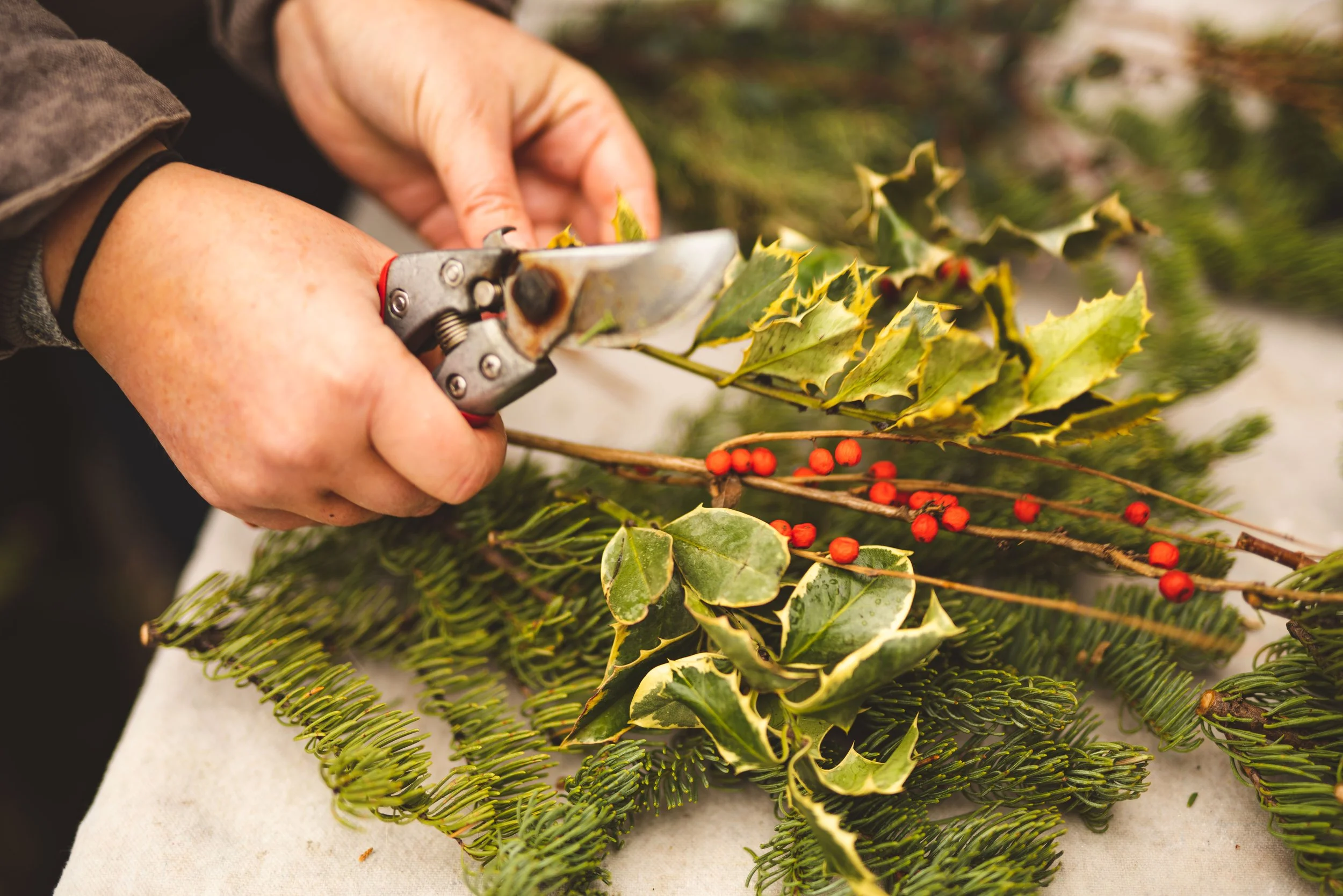
Wreath Ingredients and Sourcing
Whether you’re hand-wiring or using a clamp machine, the heart of a good wreath always comes down to ingredients. The right mix of evergreens, accents, and textural elements makes all the difference — both in appearance and longevity.
Start Local
Whenever possible, begin with what grows close to home. Many farmer-florists rely on locally foraged or homegrown evergreens, which not only cuts costs but also keeps designs authentic to your region. Local sourcing also means fresher materials that hold up longer once in your customers’ homes — and it supports the growers, tree farms, and small businesses within your community.
Around here, we’re lucky to live near the Sierras, where Douglas fir, juniper, and other evergreens grow in abundance.
If you plan to forage, check for local forestry or BLM permits — many regions allow a limited number of trees or clippings to be harvested each season. These programs often support wildfire management and sustainable thinning, making it a win-win for both growers and the environment.
Supplement Strategically
Even with local abundance, you may need to supplement certain ingredients. Evergreen farms, wholesale suppliers, and floral distributors often offer pre-trimmed greens and accent branches in a range of varieties and price points. While we now work directly with our local wholesaler, who brings in beautiful greens from Oregon and beyond, we’ve also sourced from Oregon Coastal Flowers and Albin Hagstrom & Son in the past — both known for excellent quality and customer service.
Many flower farmers are also dedicating part of their fields or hoop houses to premium woody crops — such as ilex, holly, magnolia, ninebark, willow, and viburnum. Growing your own winter greenery not only reduces costs over time but also ensures you have access to high-end materials that elevate your wreaths beyond the standard evergreen mix.
Tried-and-True Ingredients for Wreath Making
Base Greens (structure and volume)
Douglas fir
Noble fir
Juniper
Cedar
Spruce
Accent Greens (contrast and color)
Magnolia
Arborvitae
Eucalyptus
Variegated holly
Ilex (winterberry)
Textural Elements (depth and movement)
Pine cones
Pussy willow
Curly willow
Red dogwood branches
Dried or Everlasting Accents (warmth and visual interest)
Strawflowers
Statice
Pods
Dried citrus
Grasses
Pro Tip: Keep ingredients simple. Offering a few curated styles or accent options saves time, streamlines inventory, and still lets customers personalize their wreaths.
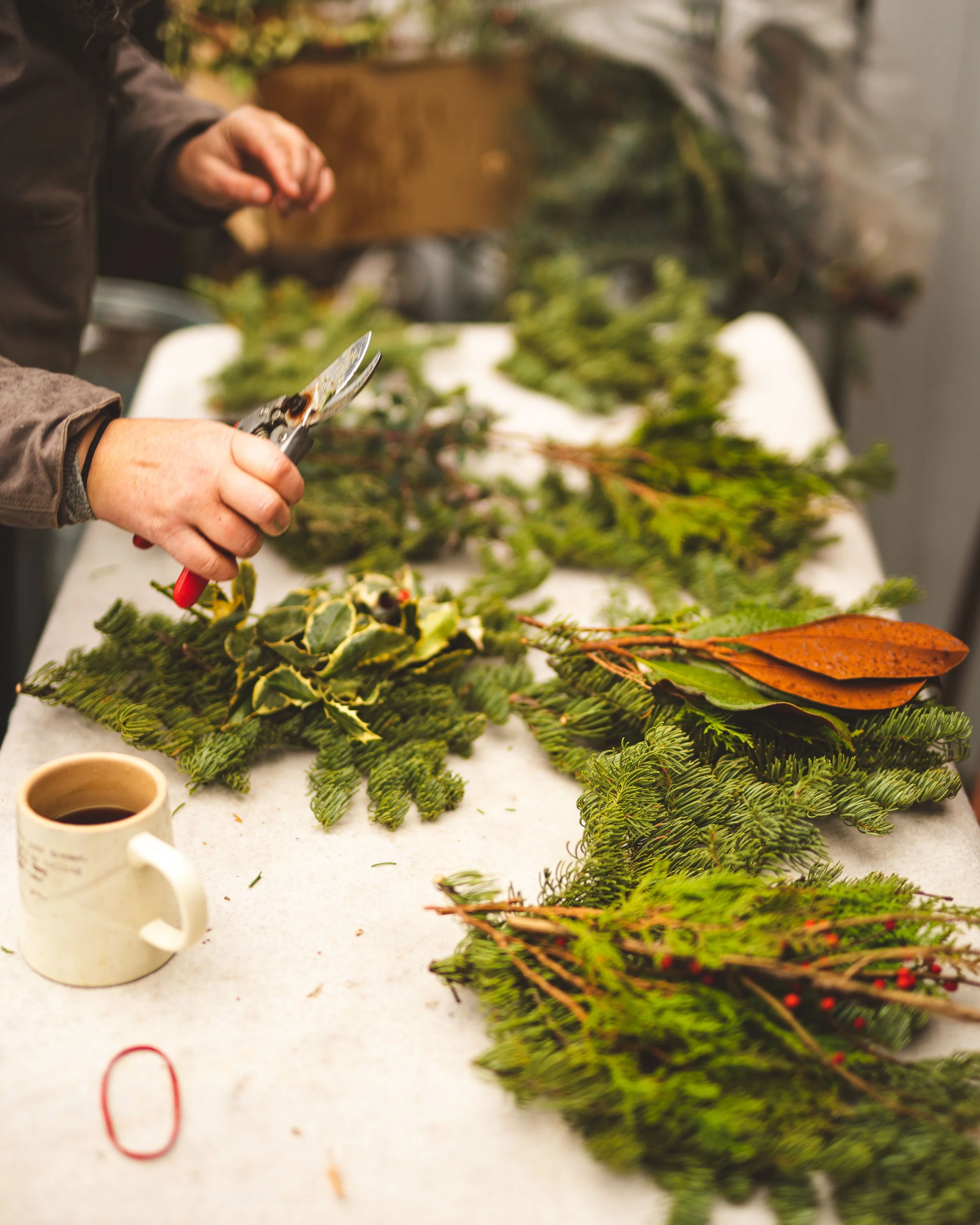
Preparing Your Materials
Before diving into wreath assembly — whether you’re using a clamp machine or hand-wiring — a little preparation goes a long way. Prepping your ingredients ahead of time keeps the workflow smooth, speeds up production, and helps your wreaths look uniform and professional.
Tools & Materials You’ll Need
Having your tools organized before you begin makes the process far more enjoyable — and saves you from hunting things down mid-wreath.
Essential Tools:
Pruners or clippers: For trimming greens and cutting branches down to size. Bootstrap Farmer’s heavy-duty pruning shears or harvest snips are both great options.
Wire cutters: For snipping paddle or spool wire.
Gloves: Protect your hands from sap, sharp needles, and wire pokes. Bootstrap Farmer’s nitrile-dipped work gloves have a good grip without bulk.
Hot glue gun and glue sticks: For securing accents such as pine cones, dried citrus, or pods.
Towel or shop rag — to wipe hands and keep your workstation dry.
Floral wire: 22–24 gauge is a reliable, all-purpose size for attaching accents or reinforcing bundles.
Ribbon or fabric strips (optional): For bows or decorative wraps.
Wreath clamp machine (if using) or spool wire for hand-wired wreaths.
Trays or bins for organization: Bootstrap Farmer’s 10x20 trays are great for sorting greens, cones, and dried materials while keeping your workspace tidy.
Buckets or containers — for holding fresh greens and keeping your workstation organized. I like using square vases from The Container Source — they fit neatly along the worktable and make it easy to group ingredients by type.
Spray bottle — filled with clean water or a diluted Wilt Pruf solution to mist greens as you work and keep them supple.
Condition and Cut Your Greens
Start by giving your greens a quick inspection. Trim off any broken or overly thick stems and cut branches down into workable pieces, roughly 6–8 inches long. This length is versatile enough for both clamping and wiring, giving each bundle fullness without bulk.
If your greens feel a little dry, spritz them lightly with water and let them rest in a cool, shaded space before assembling. This helps rehydrate the needles and makes them more pliable when bundling. If an evergreen feels brittle or starts shattering as you handle it, skip using it — it’s already too dry and will only create extra cleanup and a less durable wreath.
Keep your workspace cool and out of direct sun — warmth dries evergreens quickly, while cool air helps them stay fresh and pliable.
Tip for Hand-Wiring: Consistent bundle size is key. Having pre-cut, similar-length pieces will make wiring smoother and help your wreaths look balanced all the way around.
Preparing Pine Cones and Accents
Some textural elements need a little prep before they’re wreath-ready. Pine cones, for example, can be sticky or closed when freshly gathered. To clean and open them, bake at 225°F for 20–30 minutes until the sap melts and the scales open. Lay them on foil in a single layer to cure for 24 hours before using.
Dried accents like pods, citrus slices, and strawflowers can be grouped in advance so they’re ready to wire or glue in once your wreath base is finished.
If you’re using delicate or lightweight dried materials, reserve them for custom orders or indoor wreaths where they’ll hold up best.
Set Up for an Efficient Workflow
Whether you’re using a clamp machine or hand-wiring, organization makes all the difference. Lay out your ingredients by category — base greens first, then accents and textural elements — on a long table or bench. This creates a natural assembly line that speeds production and helps maintain consistency from wreath to wreath.
If you’re working with a clamp machine, keep your pruners and clippers close at hand, make sure your clamp bases are secured and aligned, and move slowly until you’re comfortable with the pedal pressure. If you’re hand-wiring, pre-cut your wire to length so you can move quickly from one bundle to the next.
A little prep before you start making wreaths can easily double your productivity — and keep your materials fresher while you work.
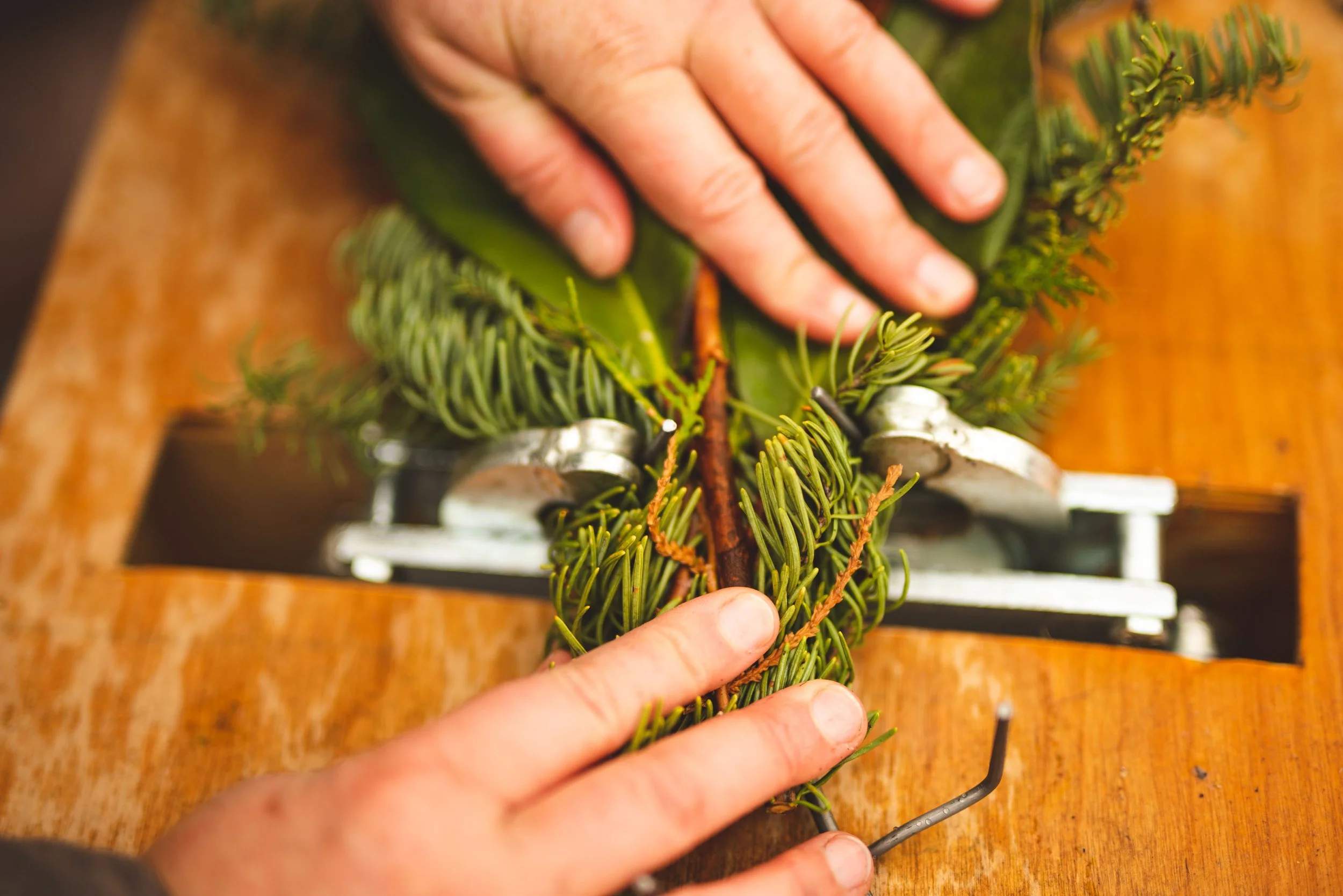
Assembling Wreaths
Now for the fun part — bringing everything together. Whether you’re using a clamp machine or hand-wiring, the same design principles apply: consistency, layering, and rhythm. Once you find your pace, wreath making becomes almost meditative.
Organize Your Workspace
Set up your table so your materials are easy to reach. Keep your base greens closest, followed by accent greens and textural elements like cones or branches. If you’ve prepped everything as described earlier, your setup should flow like an assembly line — build, clamp (or wire), rotate, repeat.
If you’re using a clamp machine, double-check that the ring’s prongs are aligned in the grooves and that the clamps move smoothly. For hand-wiring, focus on maintaining even tension as you wrap — tight enough to hold, but not so tight that it cuts into stems. In either method, avoid overstuffing bundles, which can strain the clamps or make the wire difficult to secure cleanly.
Build Consistent Bundles
A professional-looking wreath starts with uniform bundles. Think of each one as a mini bouquet that layers into the next. For most designs, bundles around 6–8 inches long create a balanced, full look — but if you prefer a wilder or more dramatic style, allow longer tips or accent stems to extend past the main body for added movement.
A good rhythm looks something like this:
Base greenery (structure): Fir or cedar cut on the shorter side for a dense, traditional foundation.
Contrast greenery (color and shape): Juniper or magnolia, with slightly longer stems to break up uniformity and add texture.
Textural accent (movement): Pussy willow, curly willow, or similar branches that extend beyond the base to create a natural, foraged feel.
To make your premium ingredients really stand out, alternate every other clamp (or bundle) between a specialty element — such as holly, magnolia, or ilex — and a textural accent like curly willow or juniper. This rhythm creates a more dynamic, intentional design while stretching your higher-cost materials further.
Tip for Hand-Wiring: Use a continuous spool of wire rather than cutting individual lengths. Place each bundle flat against the frame and wrap the wire snugly two to three times before moving on. Keep steady tension so the wreath stays secure without cutting into the stems.
Clamp or Wire as You Go
For those using a clamp machine, position your first bundle so the tips reach halfway into the space between clamps. Press down slowly on the pedal to secure, keeping your fingers clear. Each new bundle should overlap the previous one, hiding stems and building that signature spiral form.
If you’re hand-wiring, the same layering concept applies — just rotate your frame as you go, overlapping each new bundle over the last to create a smooth, full circle.
Don’t rush the final bundle — it’s always the trickiest! Lift the first bundle slightly to tuck the last one underneath, ensuring the stems are fully secured and the transition seamless.
Finishing Touches
Once all the bundles are in place, hang or stand your wreath upright to check the overall shape. Give it a light “hair trim” if needed — snip stray or uneven branches to refine the silhouette. For a tighter, more traditional look, trim closer for clean lines; for wilder, more organic designs, let the longer tips stay but make sure the wreath still feels balanced rather than lopsided.
Add wired accents like pine cones, citrus slices, or dried pods at this stage. Use floral wire or hot glue to secure, keeping placement evenly distributed so the design looks cohesive from every angle.
If you’d like to extend the life of your wreath, give it a light misting of water or spray with Wilt Pruf to help seal in moisture.
Finally, add ribbon or fabric if desired — or keep it simple and natural.
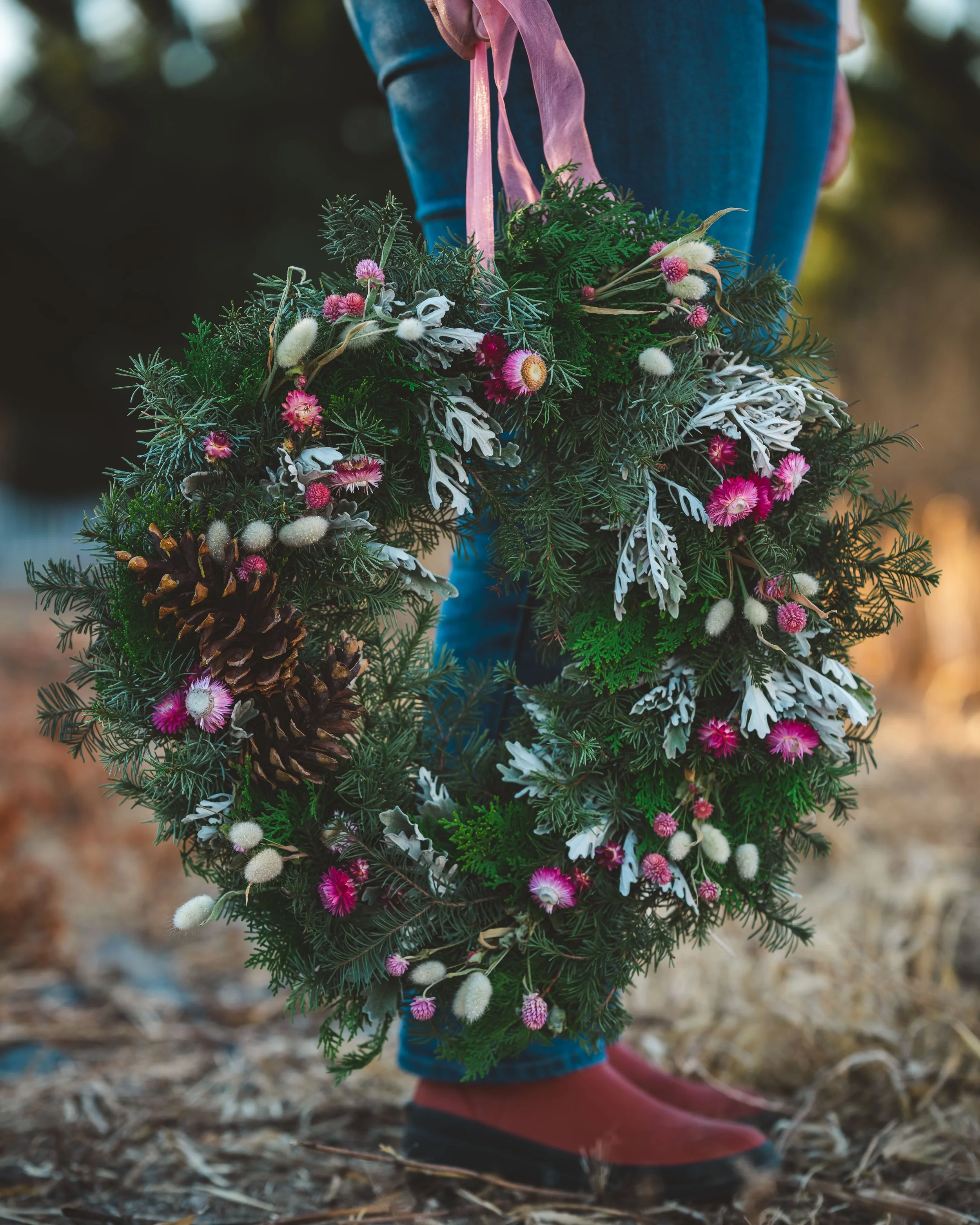
Troubleshooting & Common Mistakes
Even experienced wreath makers run into small hiccups. Here’s how to diagnose and fix them quickly — before they throw off your rhythm.
Uneven Fullness or Gaps
Keep bundle sizes consistent and overlap evenly.
This usually happens when bundles vary in size or spacing. To fix it, lift the sparse area and tuck in a small bundle or a few clipped stems using wire or glue. Going forward, prep uniform bundles to keep your wreaths balanced from start to finish.
Slipping Clamps or Loose Bundles
Reduce bulk and maintain even tension.
If a section feels loose, it’s often from overstuffed bundles or stems too thick to clamp cleanly. Avoid using thick branches — they can keep the clamp from closing properly or make a hand-wired wreath heavy and uneven. Rebuild the section with smaller, more flexible pieces.
Crooked or Misshapen Wreaths
Check weight distribution and clamp pressure.
If your wreath looks lopsided, it’s usually from heavier materials on one side or uneven pressure while clamping. Hang it up and step back — trimming heavier areas or adding a few lighter stems will restore symmetry.
Dry or Brittle Greens
Hydrate or replace overly dry stems.
Greens that snap or shed were likely too dry when assembled. Replace the worst areas and spritz lightly with water to refresh the rest. For future batches, test pliability before using — if a stem cracks, skip it.
Accents Not Staying in Place
Secure with both wire and glue for stability.
If cones, citrus, or pods shift or fall off, reinforce them with floral wire through the base, twisting around a firm branch or clamp. If using hot glue, let it set fully before moving — especially in cool or humid conditions.
When working with berry branches or holly, the berries often sit lower on the stem and can get hidden behind greenery. To make them pop, snip individual clusters and hot glue them higher onto the leaves. This adds dimension, draws the eye, and gives that festive burst of color without needing extra product.
Pro Tip: If your wreath just feels “off,” step back and look from a few feet away. Most balance issues are about proportion, not perfection — a few strategic snips or additions will pull it back together.
Preventing Problems Before They Start
Batch efficiently and check your first wreath before scaling up.
Before diving into production, lay out all your bundles in alternating designs — for a 14-inch clamp base, that’s typically 14 bundles per wreath, resulting in a finished size of about 20–22 inches depending on fullness. This ensures consistency, keeps your rhythm smooth, and helps you spot spacing issues early.
Once your first wreath is finished, hang and inspect it before starting the next batch. This quick check helps you fine-tune bundle size and placement, saving time (and materials) across the rest of your run.
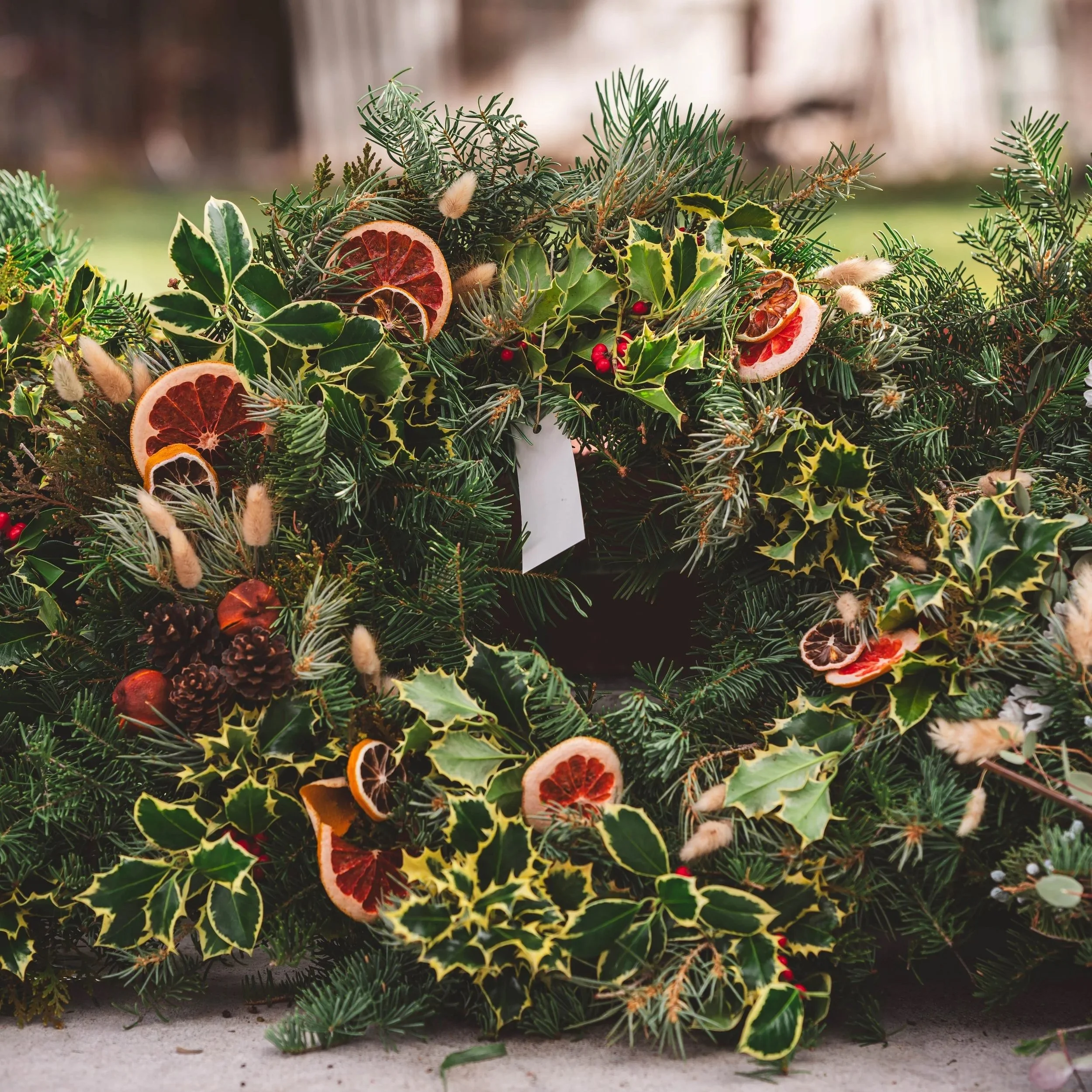
Presentation & Care
How you finish and deliver your wreaths says as much about your brand as the design itself. The presentation doesn’t have to be elaborate — it just needs to feel intentional and cohesive.
Finishing Touches That Fit Your Brand
We keep our presentation simple and natural. Each wreath is finished with a twine tie and our business card, and for pre-orders, we add a handwritten name tag so pickup is smooth and personal.
Customers who love a little extra flourish can choose to add a ribbon for an additional charge — this keeps the base price approachable while giving them the option to personalize.
Pro Tip: Partnering with a local business for pickup? A complimentary wreath or potted amaryllis is a great thank-you gift — and doubles as a beautiful seasonal display for their storefront.
Providing Care Instructions
Even seasoned customers appreciate a quick reminder on how to make their wreaths last. You can include a small printed card with care basics or link to a digital care guide on your website or in a follow-up email — whichever best fits your workflow.
Here’s what to include:
Placement: Hang outdoors or in a cool, shaded area away from direct heat or full sun.
Hydration: Lightly mist every few days to slow drying. Never soak or submerge.
Longevity: Fresh evergreen wreaths typically last 4–6 weeks, though colder regions may see them last much longer. Some customers even enjoy leaving them up as they dry naturally — a more rustic, preserved look that can carry through mid-winter.
Natural Shedding: Some needle or berry drop is normal — it’s part of the natural aging process.
End of Season: Remove wire or clamps and compost the greens; reuse the metal base next year.
Pro Tip: Linking to an online care guide also gives you a chance to share what’s next — like spring subscriptions, bulb pre-orders, or workshops — keeping customers engaged long after the holidays.
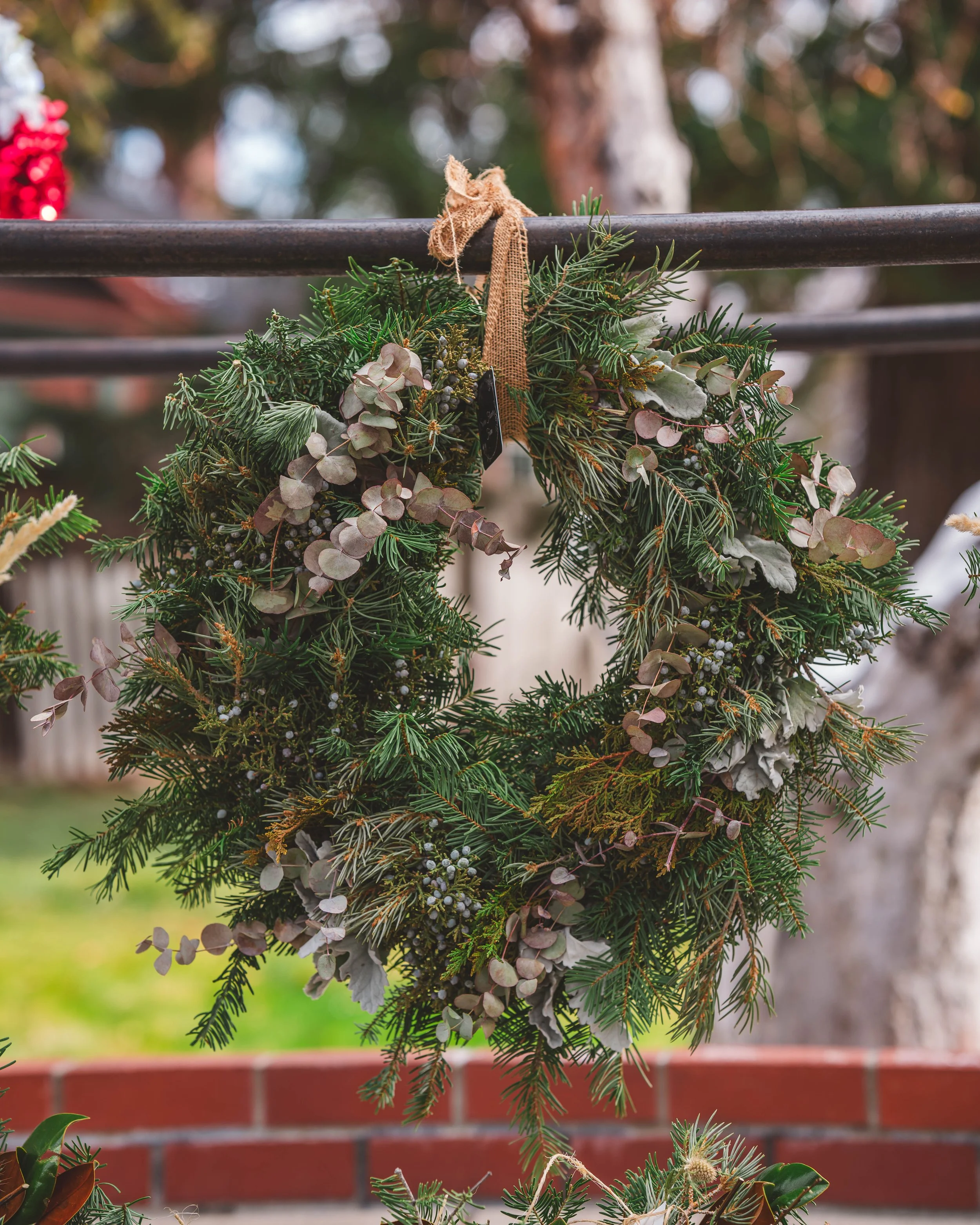
Wrapping Up
Wreath-making is one of those quiet joys of the flower-farming year — creative, grounding, and a beautiful bridge between seasons. Whether you make a dozen or a hundred, the process connects you back to your materials and gives your customers a way to bring nature into their homes through the holidays.
For farmer-florists, it’s also a smart business move. Holiday offerings keep your brand visible through the slower months, help move dried or foraged materials from your fields, and bring steady cash flow right when you’re planning for spring.
Start small, refine your systems, and make it enjoyable — the smell of evergreens, the rhythm of the clamp machine, the simple pleasure of crafting with your hands. It’s more than just a product; it’s a way to carry your growing season’s story straight into winter.
Watch the Process in Action
Want to see how the wreath clamp machine works in real time? Watch our step-by-step video on making a professional wreath start to finish: